
8 Road Trip With Kids Tips for a Calmer Drive



A long drive can be a thrilling adventure for kids, or a waiting game that starts with “are we there yet?” about every five minutes. How smoothly does it go? That depends less on the child’s age than on preparation and expectations. These road trip with kids tips focus on planning, regular breaks, reachable activities and keeping close to a child’s usual routine.
1. Plan around the child’s rhythm

Not every child can sit still for hours. Timing matters. With little ones especially, planning the drive around naps can make a big difference, and families split on how to do it: some leave early in the morning, while others find it easier to drive during nap time. No single answer wins, and many parents only find out which camp they’re in after the first long trip.
If your child sleeps in the car, use that window; if they stay awake, plan more frequent stops.
2. Prepare before the boredom hits
Boredom in the back seat is almost guaranteed. The goal? Managing it, not eliminating it. A small travel bag can help:
- A new coloring book
- Stickers
- Magnetic games, so small pieces don’t end up under the seats
- Storybooks
- Audiobooks, a good swap for a child who feels queasy reading in the car (more on that in tip 6)
- Small surprise toys the child has not seen before
- Sensory toys (squishy balls, push-pop toys, textured fidgets)
Emptying the whole bag before the car leaves the driveway is the classic mistake. The trick: do not hand everything over at once. Bringing out new activities one at a time, a coloring book first and the stickers an hour later, keeps interest going longer, which is why rotating toys is such a common piece of parent advice.
3. Use breaks to burn energy, not just for the bathroom
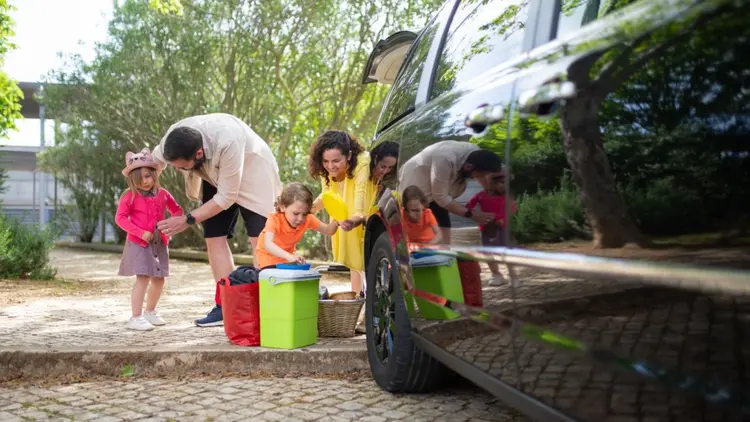
Sitting in a car seat for hours is harder for kids than for adults. A stop is not only for bathrooms and meals. It is a chance to move. A short walk, a few minutes of running, some stretching or simply time outdoors makes the rest of the drive easier; long-drive advice keeps coming back to letting children move every few hours. Plan the stops, too. Picking rest areas in advance cuts stress, so choose places where kids can run around instead of stopping at random.
4. Pick snacks strategically
Hunger can turn a calm car into a cranky one fast. So snacks matter. They should be practical and safe:
- Small pieces of fruit
- Crackers
- Cheese cubes
- Nuts (only age-appropriate and safe for the child; whole nuts are a choking risk for small kids)
- Water
Very sugary foods are trickier: in some children they may cause short bursts of energy followed by dips, so they suit an occasional treat better than they suit the main snack bag for a long drive. Then there’s the backup kit:
- Wet wipes
- A change of clothes
- Plastic bags (for trash, wet clothes or worse)
- Napkins
- A small towel
Parents often suggest keeping cleaning supplies handy, especially for unexpected situations like vomiting.
5. Use screens at the right moment instead of banning them
Screen use on long drives differs from family to family. Some parents see a tablet or cartoons as a tool that makes the hours in the car easier. Others prefer games, conversation and books.
Truth is, there is no perfect rule here. The key may be balance. Avoid making the screen the only activity: spend the first part of the drive chatting, watching the scenery or reading, for example, and switch on a film only later, so the screen supports the trip instead of becoming the sole peacekeeper.
Children who get carsick may do better with fewer screens (see tip 6).
6. Take precautions against car sickness

Some children get motion sickness on long drives: nausea, dizziness, general discomfort. Winding roads make it worse. The UK’s NHS suggests a few simple steps, and one of them surprises plenty of parents: reading does not help. The full list: avoid heavy or spicy meals before the trip, skip reading and devices, look at a fixed point such as the horizon, get fresh air and take regular breaks. Distraction helps too. Talking, listening to music or singing can keep a child’s mind off the road.
If your child gets carsick often, pack a change of clothes, wipes and the supplies mentioned above, so both child and parent stay calmer.
7. Put safety ahead of comfort
For traveling with children, nothing matters more than the right car seat. It has to match the child’s age, weight and height. The American Academy of Pediatrics recommends keeping children in rear-facing seats until they outgrow them, then moving to a forward-facing seat and later a booster until the adult seat belt fits properly. The back-seat rule is simpler, and not up for debate: the AAP advises that all children younger than 13 ride there. The CDC’s child passenger safety guidance follows the same sequence and adds a practical check: a child is ready to leave the booster only when the lap belt sits low across the upper thighs and the shoulder belt crosses the chest, not the neck. Exact limits vary by seat. The seat’s own manual decides.
8. Do not treat the drive as just “getting there”
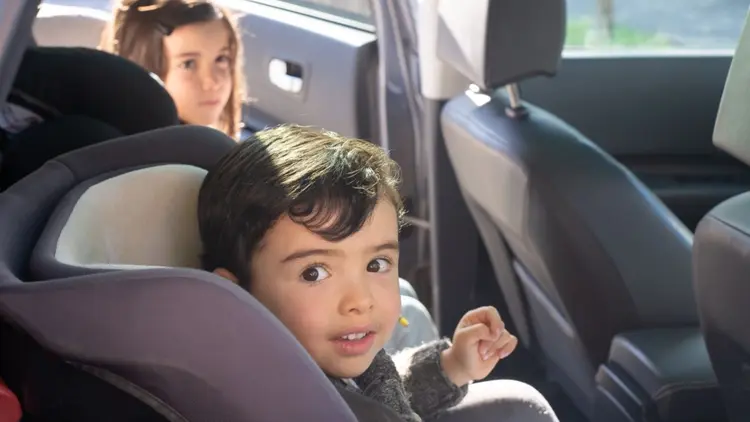
For kids, a long drive can feel like endless waiting. It does not have to. With the right approach, it becomes a small adventure. Simple games change a child’s sense of time: chatting about what you see, spotting cloud shapes, counting different vehicles or picking songs together. Older children can join in by pointing out the route on a map, choosing a rest stop together or taking on small jobs, and instead of just asking “when do we arrive?” they start to feel like part of the journey.
Finally, do not aim for a perfect drive. A bit of mess, a few “I’m bored” moments and an unplanned stop are all normal on a family road trip. Good preparation will not make the trip problem-free. What it does is make small crises far easier to manage. For most families, the winning combination is a safe seat, well-planned breaks, reachable activities and a flexible schedule.
Sources: American Academy of Pediatrics (HealthyChildren.org), Car seats: information for families, NHS, Motion sickness, CDC, Child passenger safety


















Bir yanıt yazın