
11 Most Beautiful Villages in Turkey to Visit


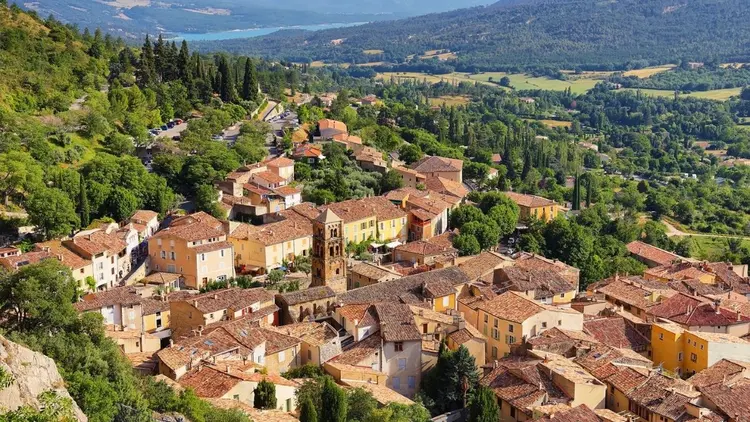
Türkiye’s big cities get the headlines, but some of its best scenery sits in places with a few hundred residents, a mosque or a church, and a tea garden. The most beautiful villages in Turkey range from Aegean wine hamlets and lakeside peninsulas to a lavender village in the southwest and a cliffside settlement on the Euphrates. These 11 start in the hills of İzmir province and end in Erzincan, far from any coast.
1. Şirince, İzmir: a fixture on most beautiful villages in Turkey lists

Şirince sits in the hills above Selçuk, which makes it an easy add-on to Ephesus, and many tour programs do exactly that: the ancient city in the morning, the village in the afternoon. Half a day is honestly enough. That’s time to walk every lane and fill a camera roll.
Staying overnight is the other option, and there are plenty of small boutique hotels, many of them in restored old Greek stone houses, plus a few houses for rent. They tend to be cozy and carefully decorated. Evenings, though, are quiet. Most shops and cafés close once the day-trippers leave, so anyone after nightlife or a livelier scene is better off in a larger hotel or back in Selçuk.
What brings people up the hill is the setting: stone houses, narrow streets and an old-world atmosphere, surrounded by vineyards. The village is known for its homemade fruit wines, sold in shops along the main lanes next to olive oil, soap and other local products, and its small restaurants serve regional home cooking.
2. Uzungöl, Trabzon

Uzungöl means “long lake,” and the village has grown up around it in the forested mountains of Trabzon province on the Black Sea coast. It’s built for visitors now, and it shows, with guesthouses and restaurants lining the shore. Trekking, birdwatching and botanical walks are all possible, and the nearby yayla (summer highland pastures) of Şekersu, Demirkapı and Yaylaönü make good outings with their own seasonal events.
Food matters here. Lakeside restaurants serve Black Sea cooking, and an organic village breakfast is the classic way to start the day. The dish to try is muhlama, a stringy, buttery mix of cornmeal, local cheese and highland butter, eaten hot from the pan with bread.
Getting there is simple. Trabzon has an airport and good road links, and from the city it’s roughly 99 km by road toward the Çaykara district.
Without a car, minibuses leave from central Trabzon, and some bus companies also run services to Uzungöl.
3. Cunda Island villages, Balıkesir

Cunda, also called Alibey Island, lies in the Aegean just off Ayvalık. Contrary to its island reputation, it doesn’t need a boat: a causeway and bridge built in the late 1960s link it to the mainland, though ferries also run from Ayvalık’s town center. Once there, small tour boats circle the island, and boats can be hired to explore the smaller islets around it.
Cobblestone lanes are the main event. Walk them, climb up to Aşıklar Tepesi (Lovers’ Hill) for the view, and look in on the restored Taksiyarhis Church, a former Greek Orthodox cathedral that now houses a branch of the Rahmi M. Koç Museum. The Paterica area and its old windmills are worth a look too.
Fish restaurants line the waterfront, and lokma, small fried dough balls soaked in syrup, is the island’s sweet.
There are no big resort hotels on Cunda, only boutique places, some on the shore with sea views and others tucked into the historic quarter. Most are reachable by car or by dolmuş, the shared minibuses that run between Ayvalık and the island.
4. Cumalıkızık, Bursa

Few places in Turkey look this much like the early Ottoman centuries. Cumalıkızık, about 10 km east of Bursa at the foot of Mount Uludağ, was founded in the 1300s as a waqf (charitable endowment) village, and in 2014 UNESCO listed it as part of the World Heritage Site “Bursa and Cumalıkızık: the Birth of the Ottoman Empire.” Narrow stone lanes run between houses painted purple, blue and yellow.
Concrete is rare here. About 270 protected buildings survive, and around 180 of them are still lived in. The houses have bay windows (cumba) and inner courtyards, many of those courtyards are now restaurants, and there are no satellite dishes or illuminated signs to spoil the view. Oghuz Turkish settlers founded seven “kızık” villages around Bursa; five survive today, and Cumalıkızık is by far the best preserved.
Fame has a cost. As in Şirince, visitors come in large numbers, and not every business matches the look of the village; breakfast in particular can disappoint. Older village women still sit outside with their handicrafts, though, and they’re the ones to buy from. A couple of hours is enough for most visitors: add an hour for a long breakfast, and 2 to 3 hours covers eating, wandering, photos and some shopping. Some houses run as guesthouses, cafés or restaurants, and Bursa itself has plenty of hotels for anyone who’d rather not drive back the same day.
5. Assos (Behramkale), Çanakkale

Assos is old. The ancient city sits above the village of Behramkale in the Ayvacık district of Çanakkale province, and its showpiece is the Temple of Athena, a Doric temple from around 530 BC on an acropolis about 238 meters above the sea. Six of its columns still stand. From up there the Greek island of Lesbos fills the horizon, and sunset is the time to go.
Down at the water, the ancient harbor has a small pebbly shore where people swim off wooden piers. Behramkale itself is a stone village worth a slow walk, with stalls selling local handicrafts and the 14th-century Hüdavendigar Mosque near the top, and the path from the village leads straight up to the ancient city and the temple.
Hotels are plentiful, from simple guesthouses to stone houses by the sea in the old harbor quarter, and staying in one of those is half the appeal.
With more time, the nearby beaches, the seaside towns of Akçay and Zeytinli, and the hill village of Adatepe make good side trips.
6. Gölyazı, Bursa

A village on a near-island. Gölyazı sits on a small peninsula in Lake Uluabat, west of Bursa, and it was once the ancient city of Apollonia ad Rhyndacum, named for Apollo, the Greek god of light; coins minted here date back to around 450 BC.
Ruins are everywhere. They lie on land and on the lake’s islands, and the list is long enough to fill a day: a structure locals call Deliktaş, thought to be an aqueduct; the remains of an ancient fortress gate known as Taş Kapı; a temple of Apollo on Kız Adası, about 1 km offshore; stretches of old city wall around the peninsula; the Hagios Georgios Church, built by the local Greek community in the 19th century; and the church of the Hagios Konstantinos Monastery on Manastır Adası (Monastery Island). The village is a protected heritage site, and it also has a mosque and a hamam (Turkish bath) whose construction dates nobody has managed to pin down.
At the start of the bridge to the peninsula stands the Ağlayan Çınar (Weeping Plane Tree), a centuries-old giant that’s become the village’s symbol.
To get there, turn south off the Bursa–İzmir highway at around kilometer 35 and follow the road about 7 km to the lake.
7. Doğanbey, Aydın

Doğanbey is the only settlement inside the Dilek Peninsula–Büyük Menderes Delta National Park, about 30 km from Söke in Aydın province. The old village began life as Domatia, settled by Greek families who arrived after the 1850s, and they lived here until the 1924 population exchange between Greece and Turkey. Then it emptied.
The stone houses, narrow streets, shops, fountain and old hospital from the late Ottoman era are what’s left, and many have since been restored as guesthouses, restaurants and second homes. Nature does the rest. The village sits by the Büyük Menderes (Meander) River delta, with views over both river and sea, and the national park is home to 804 plant species, six of them found nowhere else; the Zeus Cave and the delta wetlands are among the area’s draws. Visitors come to wander the old lanes, hike and rest by the water, and the village restaurants serve traditional Turkish home cooking. It’s also within day-trip range of İzmir by road.
8. Kuyucak, Isparta

A decade ago this was not a place people drove to. A development program called Gelecek Turizmde (“The Future Is in Tourism”), run by Türkiye’s Ministry of Culture and Tourism, the UN Development Programme, the West Mediterranean Development Agency and the brewing company Anadolu Efes, helped turn Kuyucak’s dry, empty fields into lavender, and press reports now put the village’s lavender at around 3,000 decares (roughly 300 hectares). In bloom season, tour buses crowd the tiny village. The point of the project was jobs, tourism and a second income. It worked, by the villagers’ account. Women run most of the stalls selling lavender oil, soap and sachets, and many say the lavender boom gave them a new livelihood of their own.
Worth the drive out of season? Not really. The purple lasts only about three weeks; arrive outside it and the fields are rows of round gray-green bushes. The flowers also swarm with bees, which mostly ignore people, but anyone with allergies should take care, and some visitors find out they’re sensitive to lavender itself. Before leaving, try the lavender or rose ice cream: Isparta is also Türkiye’s rose-oil region.
9. Mustafapaşa, Nevşehir

Mustafapaşa is Cappadocia without the crowds. Most tours skip it, yet its stone architecture rivals anything in the region. Before 1924 it was Sinasos, a town of Cappadocian Greeks, many of whom made their money in Istanbul as seafood and caviar traders and sent it home to build grand mansions.
The craftsmanship shows. Local stonemasons turned the soft volcanic stone into ornate facades, carved doorways and church details, and hundreds of these houses still stand, many of them now hotels. In the 1924 population exchange the Greek residents left for Greece, most resettling in a village they called Nea Sinasos on the island of Euboea, and the town took the name Mustafapaşa. It was later placed under official protection and opened to tourism. The 19th-century Church of St. Helena and Constantine in the center is the landmark to look for.
Access is straightforward. Ürgüp is only about 5 km away, Nevşehir Kapadokya Airport a little under an hour’s drive, and Kayseri Airport a bit over an hour.
For the full Cappadocia experience, book a cave room or a stone-walled hotel.
10. Zeytinliköy, Gökçeada

Gökçeada (the island of Imbros) is Türkiye’s largest island, and Zeytinliköy sits near its heart, about 3 km west of the island’s only town. Its Greek name is Agioi Theodoroi, and it’s one of the few places in Turkey where most residents are still Greek Orthodox, with three churches and a Greek-language primary school.
Ecumenical Patriarch Bartholomew I counts among the village’s natives.
The name means “olive village.” Olive trees wrap the hill it stands on. Gökçeada Airport and Gökçeada Dam are both close by, and the village is well placed for reaching the town and the rest of the island. Public buses run from the town center on set days of the week, so check the timetable first; the trip itself takes about 10 to 15 minutes, and a car or taxi gives the most freedom.
Skip the walk from town. The road is narrow and has no sidewalk.
Drivers can follow the signposted Zeytinliköy road from the town center and use the parking lot at the village entrance.
11. Apçağa, Erzincan

The list ends deep in the mountains.
Apçağa is a village of about 180 people in the Kemaliye district of Erzincan province, in Eastern Anatolia, about 6 km from Kemaliye town at an elevation of 1,276 meters, where the Euphrates cuts between steep mountains. Its old houses and setting are the attraction, along with a literary link: Apçağa is known as the village of the poet Ahmet Kutsi Tecer, author of “Orda bir köy var uzakta” (“There’s a village over there, far away”), one of the best-known poems in Turkish.
Nearby is the Karanlık Kanyon (Dark Canyon), along with the Kemaliyeliler Taş Yolu, a road the people of Kemaliye cut into the canyon walls, following the Euphrates from the edge of town. The views are spectacular. The road is narrow, though, and unlit in its tunnels, so drive it slowly, however good the view gets. There’s accommodation in both Apçağa and Kemaliye, and the river and mountains suit outdoor sports and hiking.
In Kemaliye, the Eğin Museum and the Prof. Dr. Ali Demirsoy Natural History Museum cover the area’s history and wildlife. Rail travelers can come on the Doğu Ekspresi (Eastern Express), whose line passes near Kemaliye with a stop at Bağıştaş station; drivers have several possible routes.
Sources: Wikipedia: Cumalıkızık, Wikipedia: Mustafapaşa, Wikipedia: Zeytinliköy, Wikipedia: Doğanbey, Söke (in Turkish), Go Türkiye: Bursa

Bir yanıt yazın