
19 Historic Arcades in Istanbul: The Full Guide


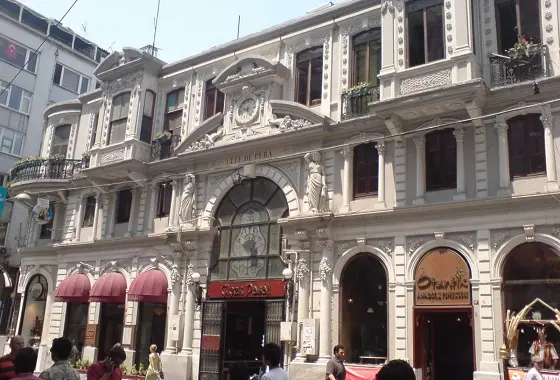
Walter Benjamin spent the last 13 years of his life on The Arcades Project, an unfinished study of 19th-century Paris that treated covered shopping passages as the natural habitat of the flâneur, the stroller who walks a city just to take it in. His subject was Paris, but the idea fits the historic arcades in Istanbul just as well.
Istanbul got its arcades, known locally as pasajlar, during the same boom—each one a short corridor linking two streets, lined with shops, and warmer than any shopping mall that came after—and quite a few are closing now, with rumors of hotel conversions trailing behind them.
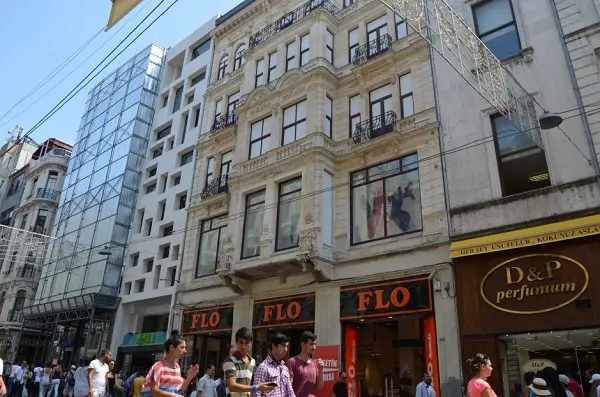
1. Anadolu Passage: linen sellers’ paradise
Sultan Abdülhamit II’s chamberlain, Sarıca Ragıp Paşa, built this five-story Italian-style passage off İstiklal Avenue in the late 1800s, one of three he named after Ottoman territories (Anadolu, Rumeli, and Afrika). The ground floor once held 17 linen and drapery shops, with 20 apartments above. The linen is gone. Today a single large Flo shoe store occupies most of the space, which is about as blunt a summary of modern İstiklal as you’ll get.
2. Rumeli Passage: from mansion to arcade
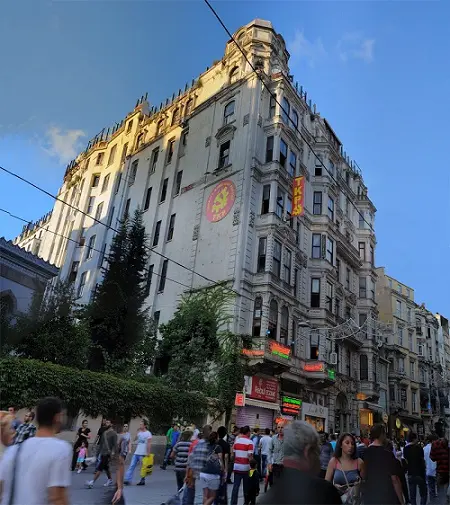
Rumeli Passage, a narrow mansion-turned-passage near Galatasaray Square, was another Ragıp Paşa property. It started life in 1894 as a private residence. Shops came later. Its restored C-block once housed a theater café and an art studio, though the passage has reportedly been shuttered amid Beyoğlu’s recent wave of hotel conversions.
3. Afrika Passage: look up for the cross-shaped skylight
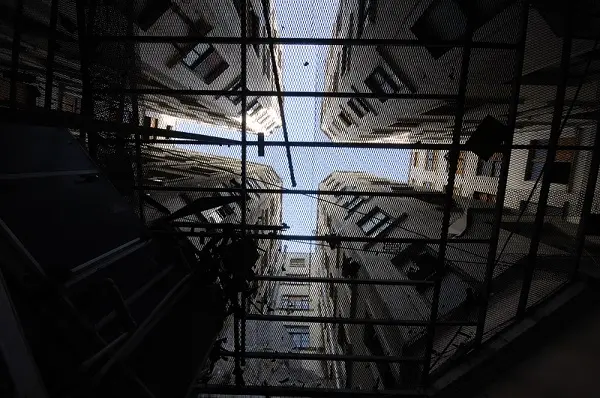
Opened in 1905, Afrika Passage once housed Levantine families upstairs and a cluster of cafés—Pen Kafe, Peripetie Bistro, Hayal Kahvesi—at street level. Its narrow corridor runs between Küçük Parmakkapı and Büyük Parmakkapı streets. Look up. A cross-shaped opening in the roof lets a sliver of sky through, and it’s the passage’s most memorable feature. The passage itself, though, has reportedly stood empty behind netting for some time. A real loss.
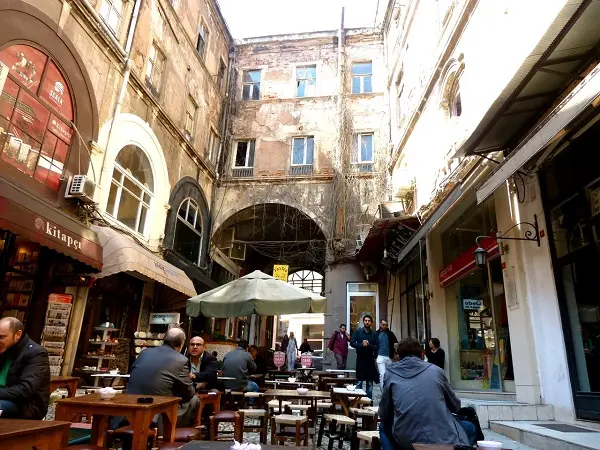
4. Hazzopulo Passage: worth it for one glass of tea
Built in 1871 by the merchant Hacopulo, this five-story passage survived two major fires and two restorations and is still one of İstiklal’s most atmospheric stops. The entrance is narrow. Duck through it and you’ll find stools set up in the courtyard for a quick glass of çay (Turkish tea). Around 40 small shops line its halls today, selling bags, jewelry, and secondhand books, and the Hazzo Pulo restaurant and wine house shares the space. History, too. Journalist Ahmet Mithat Efendi once ran a printing press here, which made it a meeting point for the reformist Young Turks.
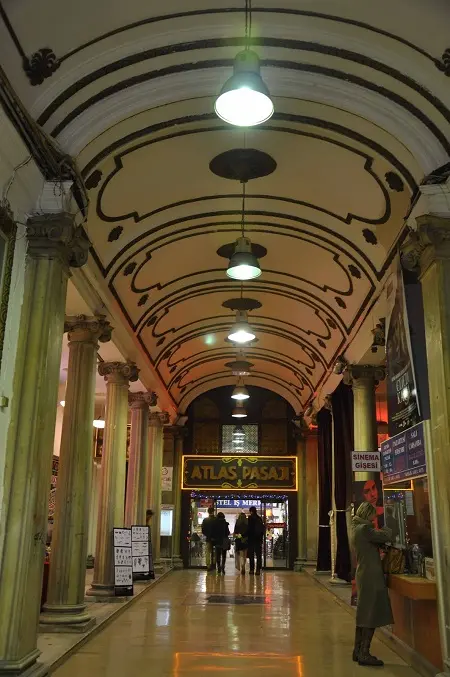
5. Atlas Passage: home to a working theater
Dating to 1877 and reshaped into its current form in 1985, Atlas Passage takes its name from one of Beyoğlu’s last surviving cinemas, and it still carries Ottoman-era architectural details across its 44 shops selling original gifts, cool clothing, and handmade jewelry.
There’s a stage, too. The Küçük Sahne of the Istanbul State Theatre is based here, so see a play, then wander the passage afterward.
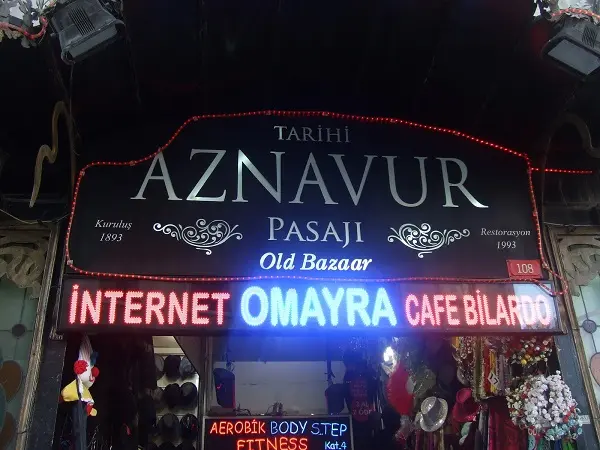
6. Aznavur Passage: once home to a chemistry lab
Built gradually from the 1890s and completed in 1924, Aznavur Passage was home to the chemistry lab and pharmacy of Alexander Vasiliyadis. Most visitors miss that detail. Its nine floors now hold 28 shops and a string of cafés, drawing shoppers in for scarves and winter wool caps in colder months and light scarves in summer. Downstairs is the place for secondhand clothing, jewelry, and one-of-a-kind souvenirs. It’s also one of the few passages that still draws a steady stream of tourists.
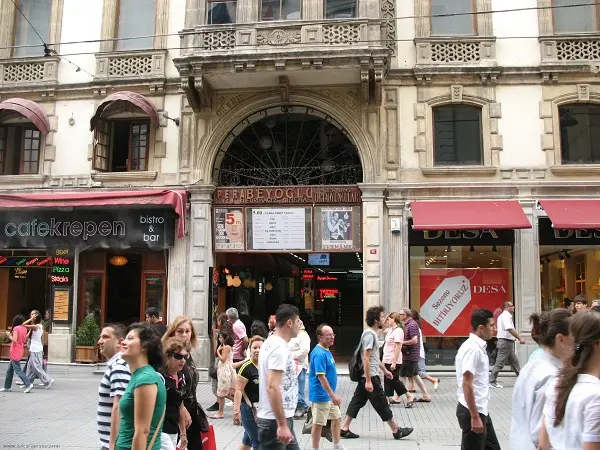
7. Halep Passage: two stages and a screen
Halep Passage was built in 1885 and partly rebuilt in 1984 behind its preserved neo-Renaissance façade. It goes by two names. Film buffs know it as Beyoğlu Passage, after its cinema, while theatergoers come for its two stages: Ortaoyuncular and the Cüneyt Türel Stage of Tiyatro Gerçek. Not into theater? It’s also lined with gift shops, jewelry stalls, vintage clothing, and tattoo and piercing studios, plus Krepen Steak for a quick bite.
8. Elhamra Passage: where Modern Times first played
Elhamra was rebuilt in Ottoman Neoclassical style in 1923 after an earlier theater burned down. Technically, it was never a through-passage. Its wide shopping corridor earned it the name anyway. The real claim to fame is the Elhamra Cinema, where Charlie Chaplin’s Modern Times and Türkiye’s first talking film, İstanbul Sokaklarında, both premiered. The cinema burned down in 1999; today the passage holds clothing shops, Medya Bookstore, and the Elhamra Club.
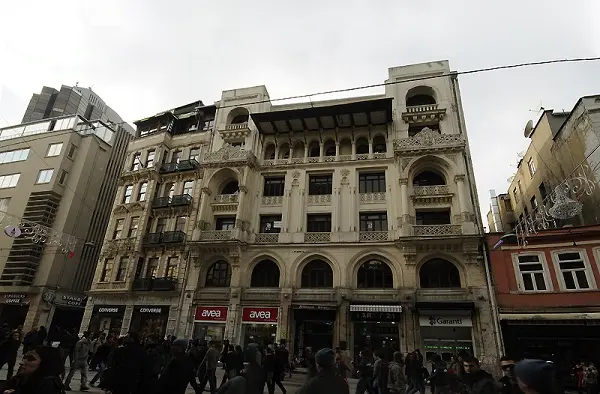
9. Terkos Passage: a bargain-hunter’s cauldron
Built by the D’Andria family in the 1880s, Terkos was once home to a string of restaurants run by Jorj Ruggieri and later Laszlo Boronkay. Bargain hunters own it now. Its shelves are stacked with export-surplus stock from recognizable brands at every budget.
By night, venues like Bronx Pi and Beyzade Restoran take over the same stretch.
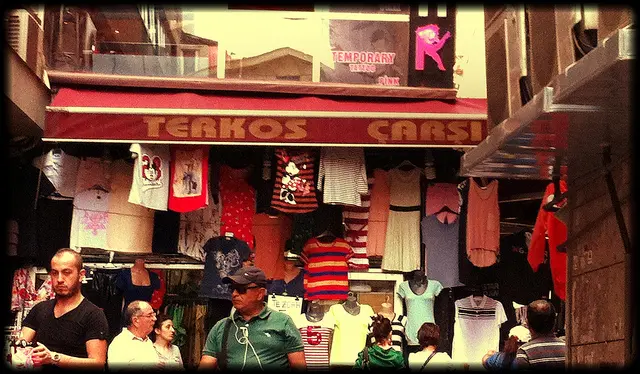
10. Beyoğlu Business Center: a labyrinth of surplus stock
Beyoğlu Business Center is easy to walk past without noticing. Tucked inside the Odakule building, it’s a maze of roughly 250 shops and workshops across three sections—similar in spirit to Terkos, but larger. Expect export-surplus clothing, bags, shoes, and accessories at every turn. Need a break between rounds? Midpoint and Ponte Restaurant are on hand.
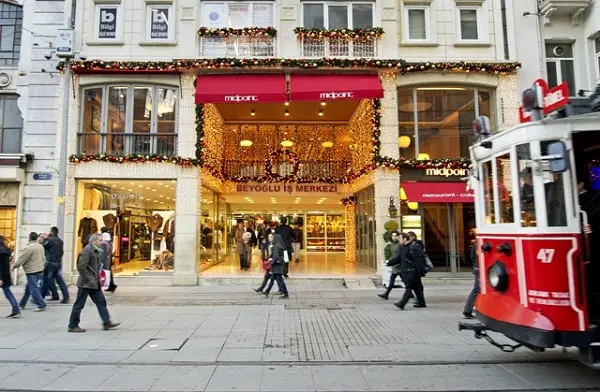
11. Syria Passage: the arcade of firsts
Syria Passage earns its “firsts” reputation honestly. Turkey’s first cinema, Santral Sineması, opened here. The building was the first to use a dual-elevator system, and it’s said to have been the first private building after the sultan’s palace to get electricity and gas. Built in 1901 for the Syrian-born Hasan Halbuni Paşa and his relative Mehmet Abud Paşa, then president of the Istanbul Chamber of Commerce, its Neoclassical façade was designed by architect Demetre Th. Bassiladis. What began as three separate apartment blocks was later linked by bridges into the single passage visitors see today. Furriers, secondhand clothing, costume shops, and the nightlife venue Propaganda fill it now.
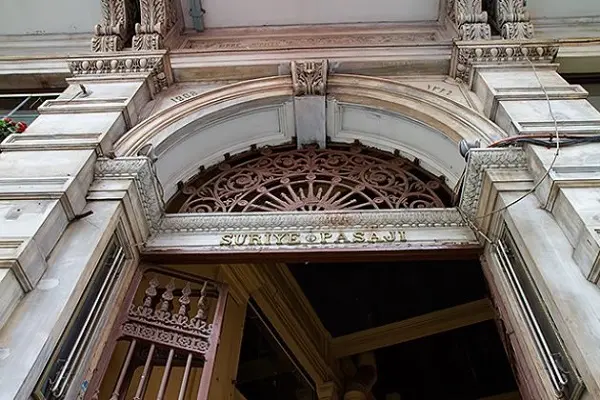
12. Çiçek Pasajı: the liveliest of the historic arcades in Istanbul
Originally built in 1876 as Cité de Péra on the site of the Naum Theatre, which burned down in 1870, this arcade only became “Çiçek Pasajı”—Flower Passage—after a string of flower sellers moved in during the armistice years following World War I. Today it’s a lively gallery of meyhanes (taverns). Under a domed glass roof, tables spill into the corridor and the air carries the smell of grilled fish and meze.
The passage was repainted and had its glass roof cleaned as recently as 2022. It remains one of İstiklal’s most reliable stops for an evening out.
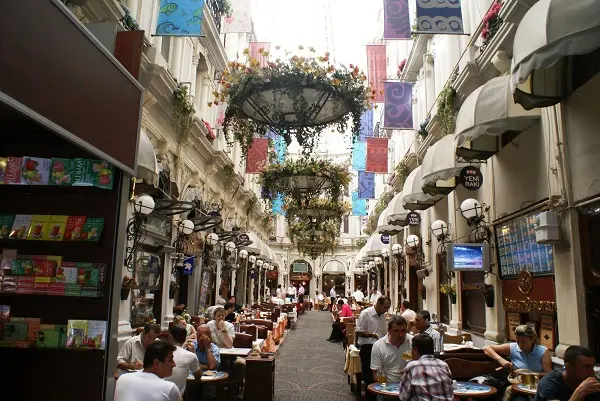
13. Avrupa Passage: look for the mirrors
Also called Aynalı Pasaj, or Mirrored Passage, this marble-floored arcade was built after an 1870 fire destroyed the theater that once stood on the site, connecting Galatasaray Square to the Fish Market. Facing statues of women look down from the upper floors above its 22 shops—jewelers, antique dealers, ceramicists, and clothing stores. And the nickname? Small mirrors set between the shopfronts. The well-known painter Komet keeps a studio here, too.
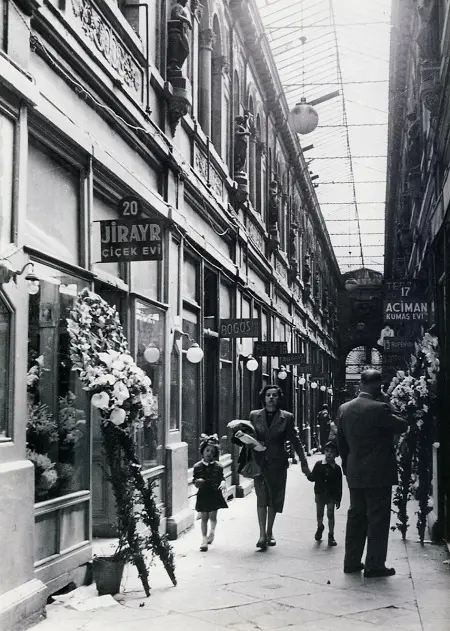
14. Tünel Passage: rediscovered in the 2000s
Built in 1883 directly across from the Tünel funicular exit, this open-topped, T-shaped passage links Sümbül Street to Asmalımescit through three joined Neoclassical buildings. Corinthian columns frame the ground-floor shops. Restoration beginning in the 1960s merged the three façades into one. Then Asmalımescit grew popular, and the passage found new life again, filling with cafés and restaurants worth a detour.
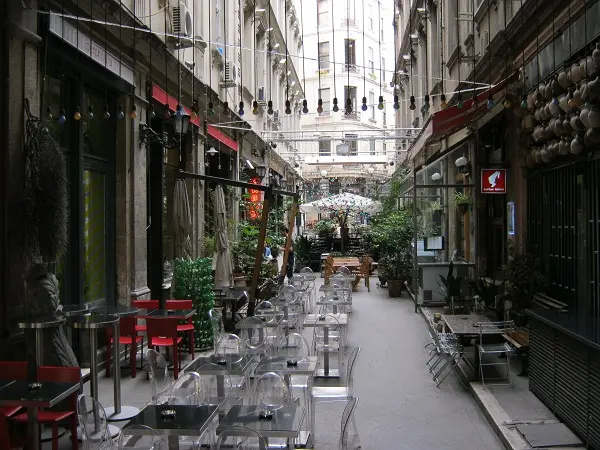
15. Markiz Passage: the patisserie that gave it its name
Opened in 1840 as Passage Oriental, this arcade changed its identity in 1940 when the Lebon patisserie became Markiz Pastanesi, a bakery so beloved for its pastries and regulars that it eventually gave the whole five-story, 25-shop passage its name. In the 1970s it nearly became an auto-parts market. A public campaign led by writer Haldun Taner saved it, and it was restored again in 2003.
The passage has since changed hands. What happens next is anyone’s guess.
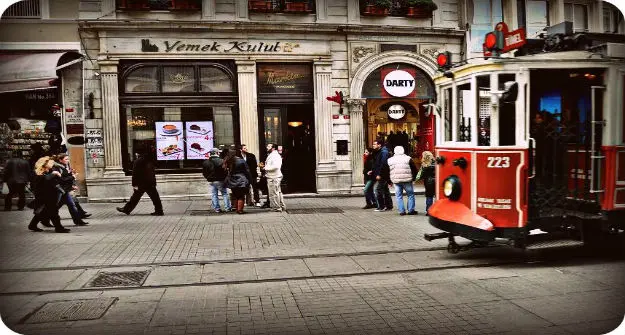
16. Tokatlıyan Passage: from hotel back to passage
Unlike most entries on this list, Tokatlıyan’s path ran in reverse—from grand hotel back down to ordinary passage.
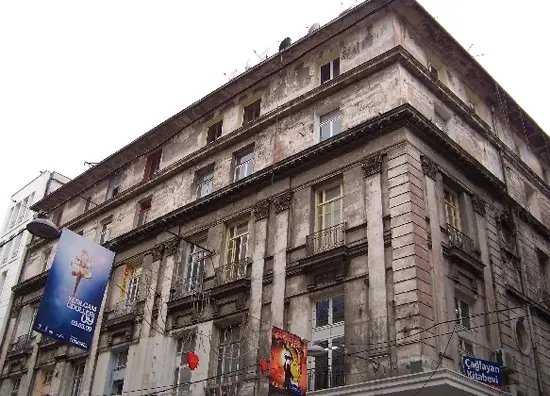
French architect Alexandre Vallaury built the Hotel Tokatlıyan on the site in 1909 for owner Mıgırdiç Tokatlıyan, and it survived two world wars and hosted guests including the Russian revolutionary Leon Trotsky. The hotel closed in 1960. After that, the building became the office passage it is today, now holding opticians, clothing shops, and small offices.
17. Reasürans Passage: see and be seen in Nişantaşı
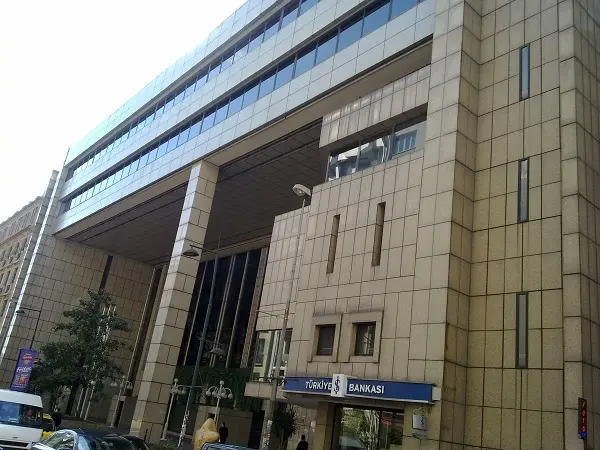
Technically, Reasürans is a shopping arcade rather than a historic passage. Officially, it’s Milli Reasürans Çarşısı. It connects Teşvikiye to Nişantaşı and Demokrasi Park, two of Istanbul’s most fashionable neighborhoods. Boutiques and a bookstore keep it busy by day; by night, bars like Zanzibar, Corridor, and Kerem Görsev Jazz Bar take over.
18. Akmar Passage: Kadıköy’s old rock and metal hub
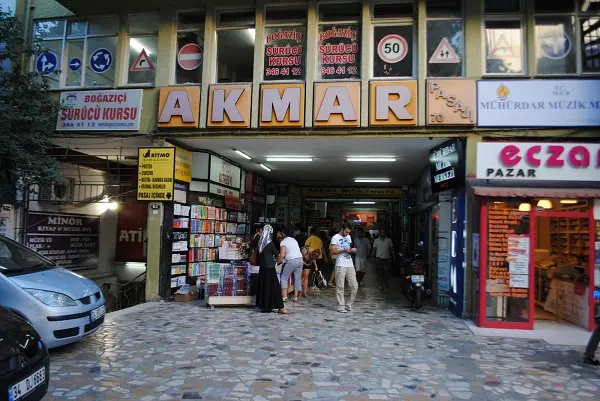
Across the Bosphorus in Kadıköy, Akmar Passage was once the go-to spot for cassette tapes and CDs of rock and metal bands that were hard to find elsewhere in Turkey, along with instruments, music gear, and secondhand bookstalls. A wave of negative press and police raids in past decades painted it as something darker. That reputation was never fair. Many of its music shops and bookstalls have since given way to textbook sellers. It’s still worth a walk through. You’ll get a feel for what it once was.
19. Doğubank Passage: once the heart of Istanbul’s electronics trade
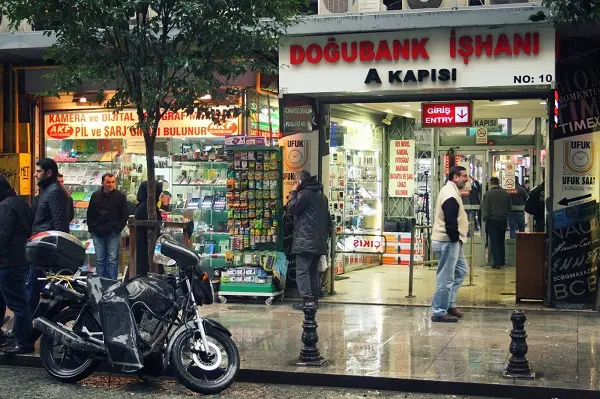
Opposite Sirkeci train station, Doğubank has sold affordable imported electronics since 1955, once drawing in a generation of Istanbul residents who built their first computers here piece by piece—a monitor from one shop, a case from another. Chain tech stores have chipped away at its business for years. A handful of electronics shops still hold on, stubbornly.
Sources: Wikipedia: Çiçek Pasajı (history and 2022 restoration), Wikivoyage: Istanbul/Galata (Beyoğlu passages and nightlife), Wikipedia: Arcades Project (Walter Benjamin)


Bir yanıt yazın