
Yassiada Island Istanbul: What to Know Before You Go


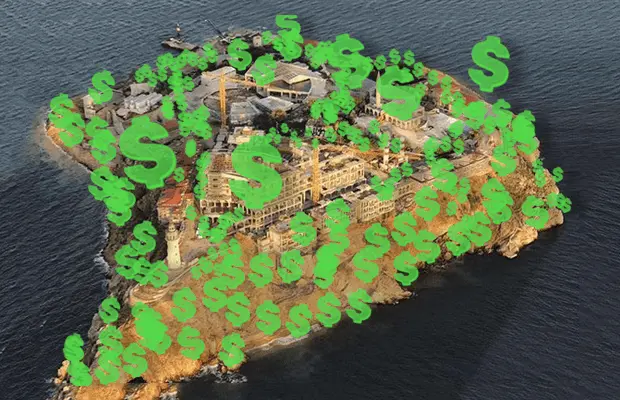
Yassiada island, Istanbul, sits just off the city’s Asian shore and has been a Byzantine prison, a British ambassador’s garden, a naval base, and the site of one of modern Türkiye’s darkest political trials. Today it goes by an official name few visitors have heard—Democracy and Freedom Island. Getting there takes a bit of homework. So does deciding whether to go.
1. It started as a Byzantine exile island, dungeons included
Yassiada’s first known use was grim. From as early as the 4th century, the Byzantines sent political and religious prisoners there, and later Emperor Theophilos had a monastery built on the island while Patriarch Ignatios added a church. Its underground passages doubled as cells. Traces of that era, including a handful of underground prison chambers, reportedly survived into relatively recent times. How much is still visible after the 2015-2020 construction work is hard to say.
2. A British ambassador turned it into a private estate
After the Ottoman conquest of Constantinople, the island sat mostly abandoned. Then a diplomat took an interest. In the mid-19th century, Sir Henry Bulwer, Britain’s ambassador to the Ottoman court, bought it from the sultan and built a small self-sufficient estate—houses, gardens, even a lemon grove. Ownership later passed to Egypt’s Khedive Ismail, and once his interest faded, Yassiada went quiet again. This time for decades.
3. The Turkish Navy made it a training post
Military use came next. In 1947, the Turkish Navy bought the island, and building started two years later, so that by the early 1950s Yassiada already had officer quarters, sports facilities, and training buildings. This was a working naval site, not a tourist destination. It stayed that way until 1960.
4. The 1960 coup trials made it infamous—but the executions happened elsewhere
After the May 27, 1960 military coup, Yassiada’s naval school buildings were converted into a courtroom for the trials of the ousted Democrat Party’s leadership. Fifteen were eventually sentenced to death. Three were executed in 1961: Prime Minister Adnan Menderes, Foreign Minister Fatin Rüştü Zorlu, and Finance Minister Hasan Polatkan. Not on Yassiada, though. The trials took place on the island, but the executions themselves were carried out on nearby İmralı Island, a distinction plenty of retellings get wrong, including older coverage of this story.
5. It was renamed “Democracy and Freedom Island” and rebuilt almost entirely
In 2013, Istanbul’s metropolitan municipality renamed the site Demokrasi ve Özgürlükler Adası—Democracy and Freedom Island—to reframe it around the 1960 trials rather than erase them. Then the building started. From 2015 until the island reopened in 2020, large-scale construction added a hotel, a congress center named for former Prime Minister Adnan Menderes, a mosque, and a museum built inside the former trial venue. The project drew heavy criticism at the time, including from conservation and environmental groups. Their main complaint? Trees were cleared, and the island’s shoreline and historic structures were altered more aggressively than its “greening” promises had suggested. That criticism shows up in a wave of social media reaction from 2016 and 2017, much of it comparing before-and-after aerial photos of the construction.
6. What’s actually on the island today
The redeveloped site includes the May 27 Museum, built where the 1960 trials were held, along with a hotel, a mosque, and the Adnan Menderes Congress and Culture Center. Divers have trained here, too. Officials presented the overhaul as a way to open a historically significant but long-closed island to the public, with green space and a marina alongside the new buildings. Not everyone bought it. Critics still refer to it, half-mockingly, as “Betonada”—Concrete Island—a nod to how much of the shoreline is now built up instead of being left wild. Visitors who come for the 1960 trials tend to get the most out of the place, since the museum sits inside the former trial venue. Anyone expecting the wooded island from older aerial photos usually leaves less impressed.
7. Visiting Yassiada island, Istanbul: what to check before you go
Yassiada isn’t on Istanbul’s regular public ferry network the way the larger Princes’ Islands are, so getting there generally means a private boat, a tour operator, or an event tied to the hotel or congress center. Plans shift, though. Availability, schedules, and whether the museum is open to independent visitors on a given day all vary.
If a visit matters to your trip, confirm current ferry or boat options, museum opening hours, and entry requirements directly with the operator or the island’s management before you plan around it. Why the extra step? Practical details change faster than history does.
Sources: Wikipedia, “Yassıada”, Hürriyet, on the island’s replanting pledge (in Turkish), Hürriyet, the forestry minister’s 2015 statement (in Turkish)



Bir yanıt yazın