
Mustafapaşa Village, Cappadocia: 8 Places to See


Fairy chimneys and underground cities dominate most Cappadocia itineraries, but Mustafapaşa village offers something different: a quiet stone settlement of churches, mansions and a madrasa, about 5 km from Ürgüp. Once a Greek Orthodox town called Sinasos, it now has around 1,300 residents and was recognized in 2021 as one of the world’s Best Tourism Villages by the UN’s tourism agency (then UNWTO). These are the places worth the detour.
Mustafapaşa village, once Sinasos: a place of layered history
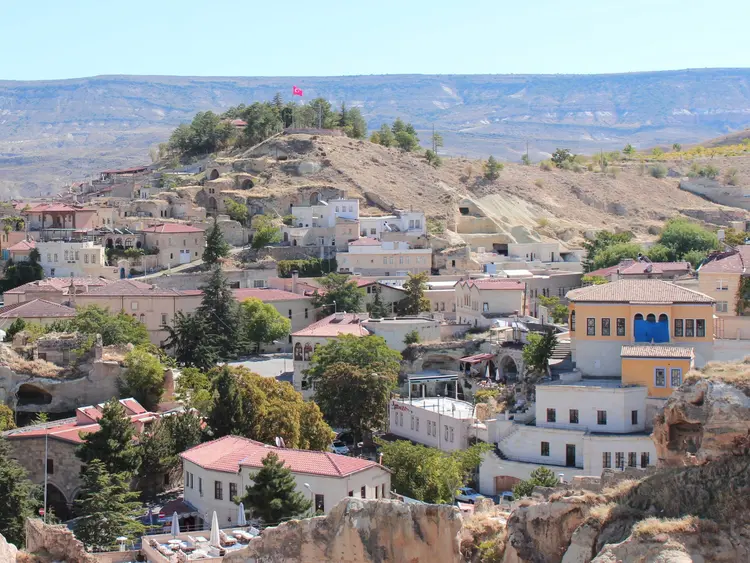
Cappadocia, with Göreme National Park and its rock sites on the UNESCO World Heritage List since 1985, has hosted many civilizations, and Mustafapaşa is one of the clearest places to see that layering. Until the 1924 population exchange between Greece and Türkiye, Orthodox Greeks lived here. They called it Sinasos. And this was no sleepy farming hamlet: many were wealthy merchants—local accounts say a good share of families lived in İstanbul for work and treated Sinasos as a summer home, while the remaining population, roughly a fifth, was Turkish and lived mostly from the land. Today the village reads like an open-air museum: stone buildings on five hills, churches, mosques and houses with carved facades. Hundreds of registered buildings survive. They date from as far back as the 9th century to the early Republic period, and the village sits under heritage protection.
The name? Harder to pin down. One local account says the village took it from a senior Ottoman official, Seyyid Mustafa Pasha, who funded fountains to solve a water shortage.
1. Church of Saints Constantine and Helena
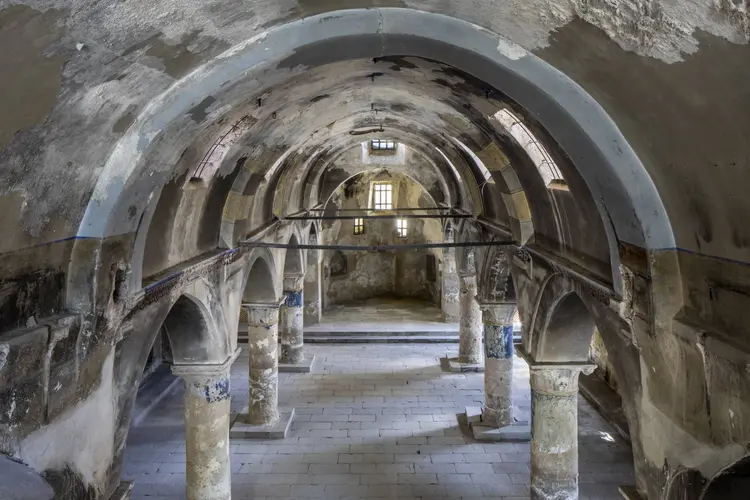
Built in 1729, this church was among the most cherished buildings of the Sinasos Greeks. It did a bit of everything. Sunday services, festivals and school ceremonies were held here, guests were welcomed, and the Ecumenical Patriarch Bartholomew is said to have visited more than once.
2. Mehmet Şakir Pasha Madrasa
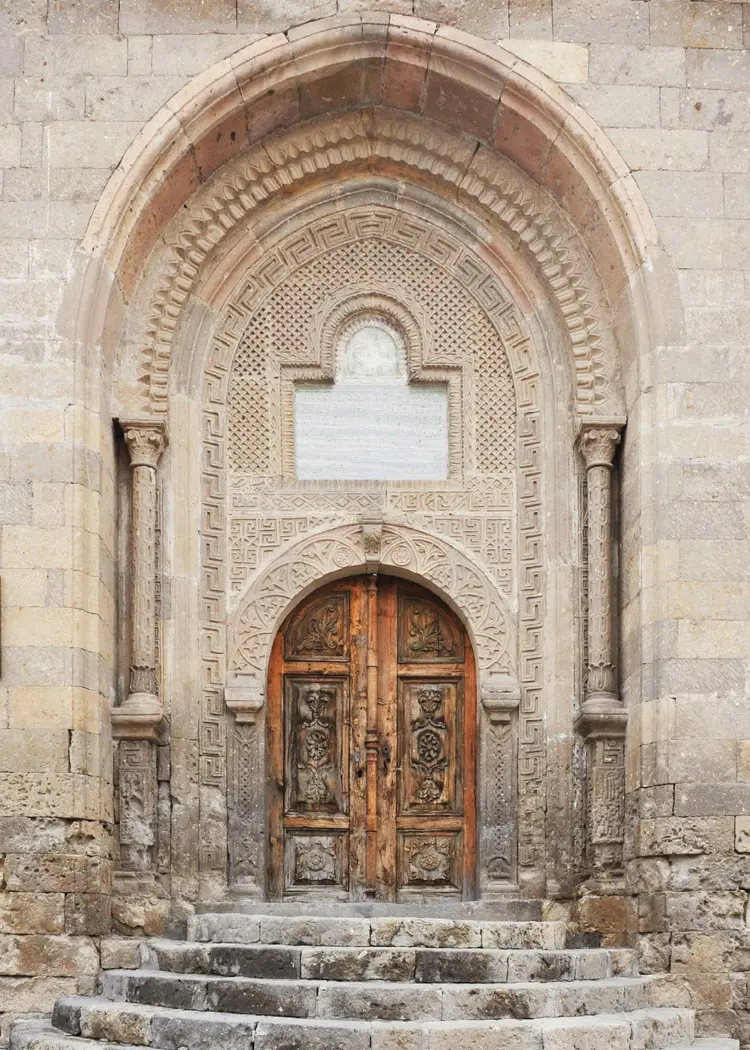
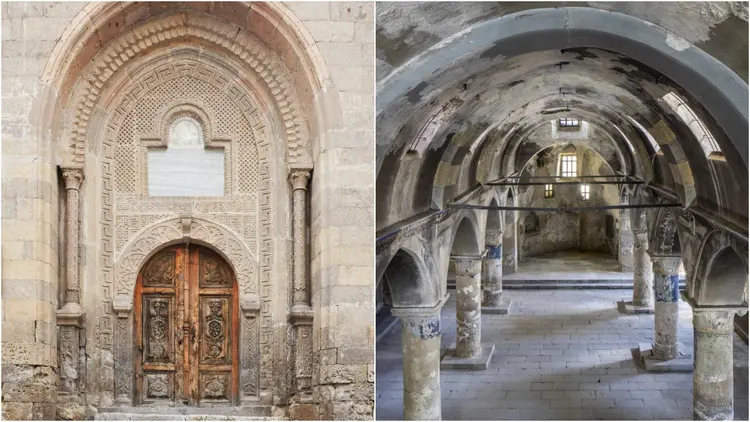
Near the village entrance stands a madrasa, or Islamic school, built in 1899. The gate is the showstopper. It is imposing, and just beyond it a covered arcade rests on eight arched columns.
This is no museum piece, though. Cappadocia University teaches here today, and Ottoman monograms (tuğra) appear throughout. That sets it apart from the Greek-built mansions nearby, which began as private homes; the madrasa began as a school and still hosts classes.
3. Saint Nicholas Monastery
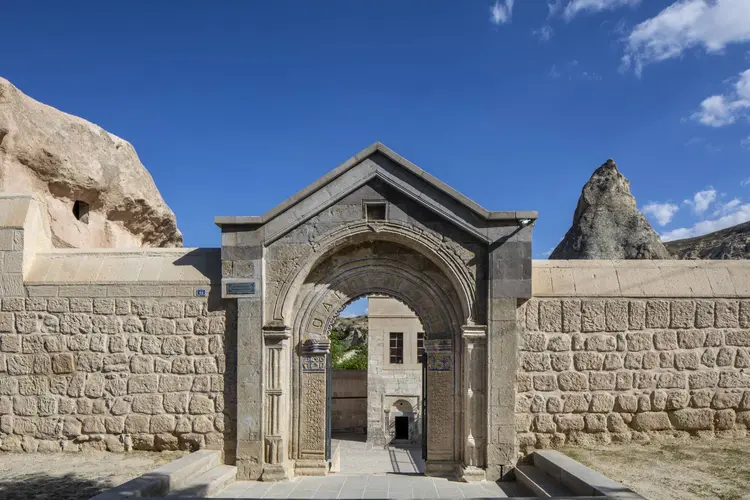
Just outside the village sits a monastery that both Muslims and Christians have long respected. Four sections, one decorated stone arched gate. Then there is the garden. Its holy spring (ayazma) has water traditionally believed to help with skin ailments.
4. Old Greek House
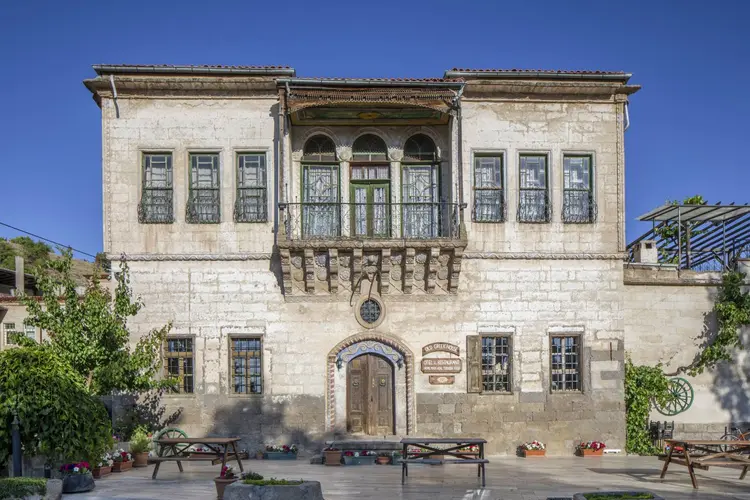
A 19th-century mansion built as a summer home by Yorgos Vasilio of İstanbul.
Then came the population exchange. Forced to leave, he handed the house to a Turkish family living in the village; the Öztürk family bought it in 1938, and it now operates as a boutique hotel. Put simply, staying overnight is the easiest way to see inside.
5. Cappadocia Art and History Museum
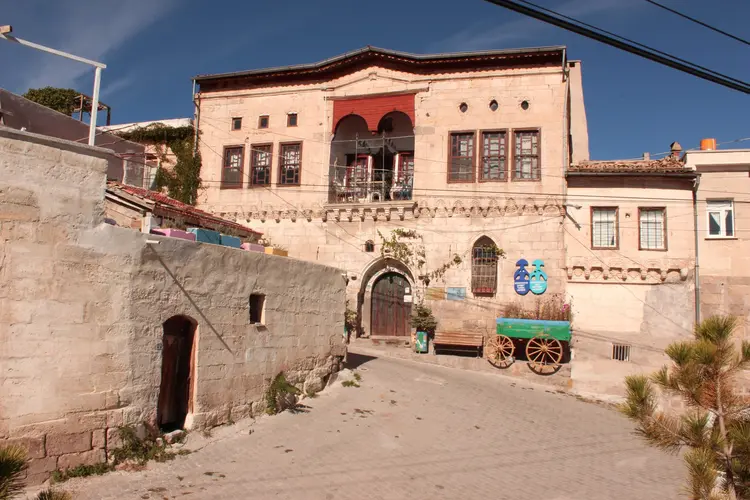
A Greek resident nicknamed Maymunoğlu had this mansion built in the 1850s, and it is now a museum that tells the story of Cappadocian culture through dolls. Hence the refreshingly literal local name: the “Doll Museum” (Bebek Müzesi).
Don’t skip the terrace floor. It offers one of the best views in the village.
6. Maraşoğlu Bridge
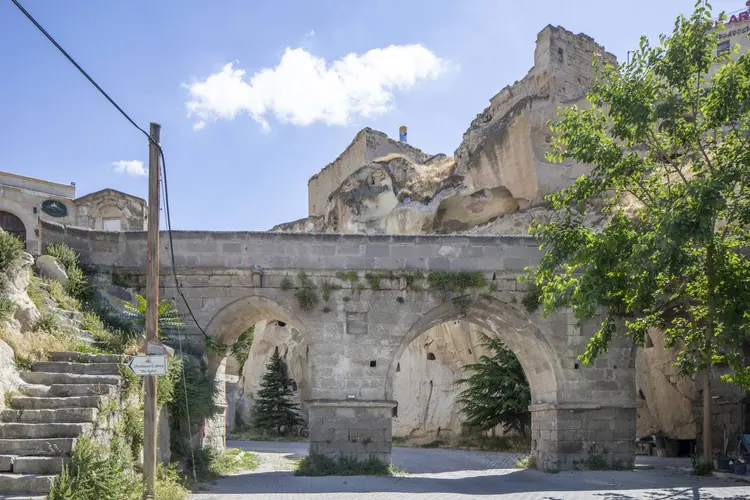
In 1865, Vasil Dimitri Maraşoğlu built this bridge to connect the Hamam and Manastır quarters.
Three arches, two piers. Most of it is cut stone.
7. Church of Saint Basil
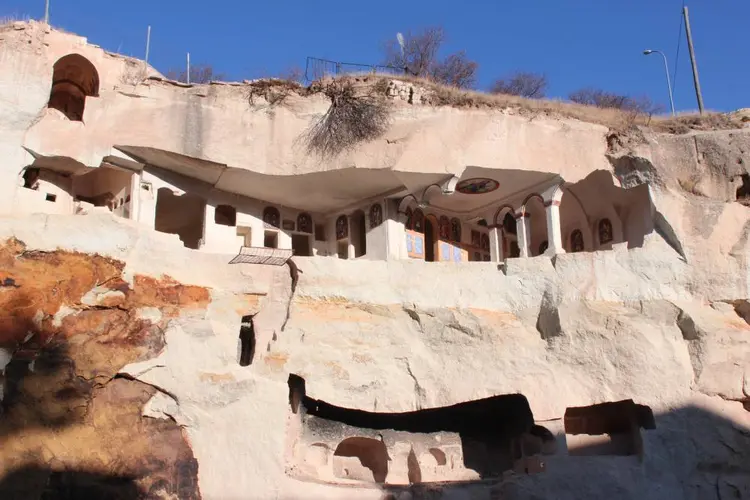
This 19th-century church on the village’s east side is entered through a small room with steps. Look to the right wall. It holds a Deesis scene showing Jesus, Mary and John the Baptist.
8. Haralambos Sultanidis Mansion
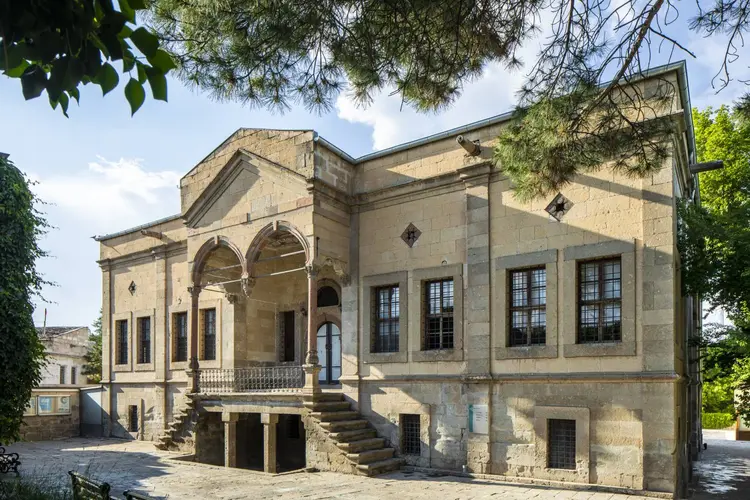
One of the grandest mansions in the village, built in 1892 for the İstanbul shipowner Haralambos Sultanidis. It was designed as a family home. Over the years, though, it also served as a guesthouse, a social venue and even a primary school.
The draw? Its decorations and sheer size.
Walk the village long enough and a pattern shows: İstanbul money stands behind several of its grandest houses, from the Old Greek House to this shipowner’s mansion.
Photographs courtesy of Cappadocia University. Sources: UN Tourism, Best Tourism Villages: Mustafapaşa, Go Türkiye: The Best Tourism Villages, Taraklı and Mustafapaşa, Turkish National Commission for UNESCO: World Heritage List (in Turkish)

Bir yanıt yazın