
Santa Valley: Türkiye’s Abandoned Mountain Town


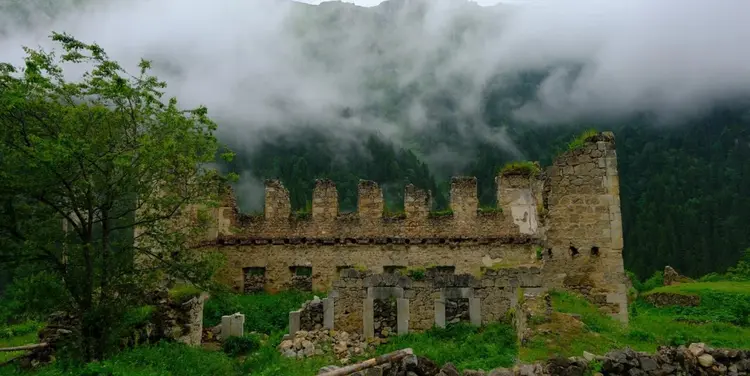
High in the mountains of Gümüşhane, inland from Türkiye’s Black Sea coast, the stone houses, churches and fountains of Santa Valley still stand on the slopes. Known today as the Santa ruins, the site feels like another century. But this was never just a handful of old buildings—it was a large mining settlement where thousands of people once lived and worked.
1. Santa Valley: A historic settlement in the mountains
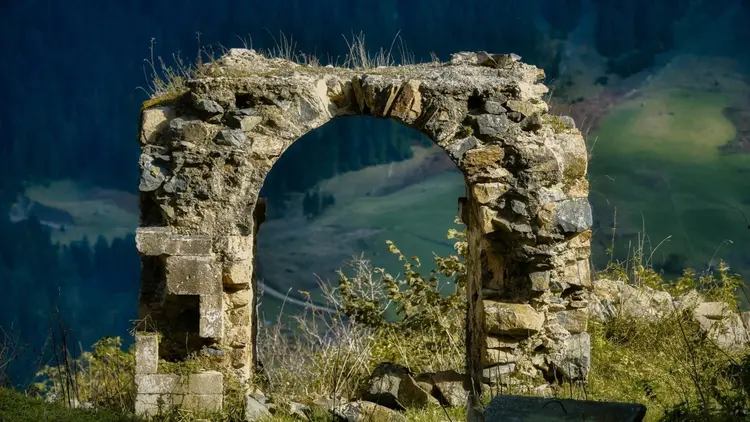
Santa Valley lies in Dumanlı village, in the Central district of Gümüşhane, about 72 km from the city, though figures vary by source. Three slopes, split by valleys. Streams, forest and steep ground surround it on every side.
Mining is the key to Santa’s story. Sources describe an important caravan and mining village of the Ottoman period, founded in the 17th century by the region’s Greek Orthodox community. Iron, lead and silver brought money. The population grew. According to Türkiye’s official tourism portal, GoTürkiye, the heyday came in the 19th century, when around 5,000 people lived in the area.
2. Seven neighborhoods, hundreds of buildings
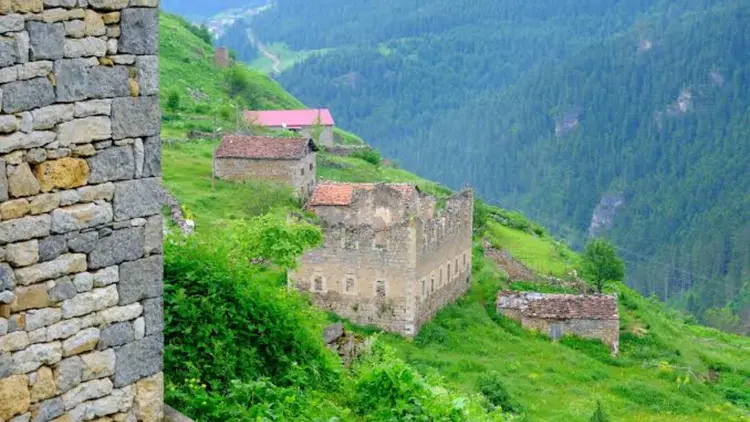
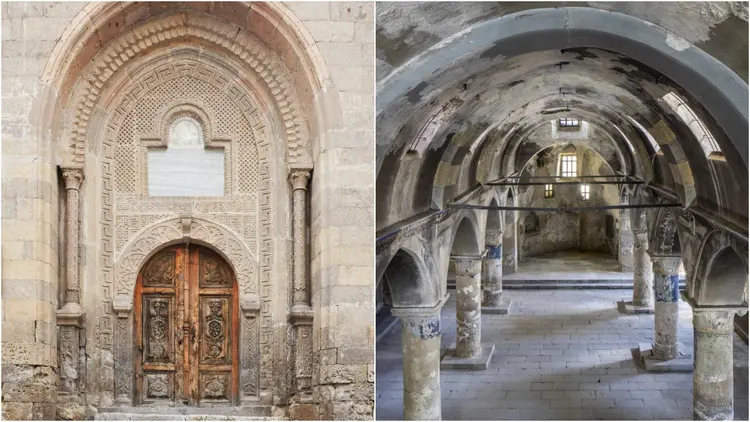
The Santa ruins are what’s left of a much larger settlement, and the exact size is hard to pin down. Reports mention up to 13 historic neighborhoods, seven of them under conservation status today. Among the names: Piştovlu, Binatlı, İşhanlı, Terzili, Çakallı, Zurnacılı and Çinganlı-Sincanlı. More than 400 historic houses, shops, schools, churches and fountains are said to survive. Each neighborhood has its stone houses, and usually a church and a fountain too. Stone meets timber. Because the houses spread across the slope and connect only through footpaths, the whole place feels less like a typical archaeological site and more like an abandoned town. The scale tends to sink in only when a second neighborhood shows up on the opposite slope.
3. Why was Santa abandoned?
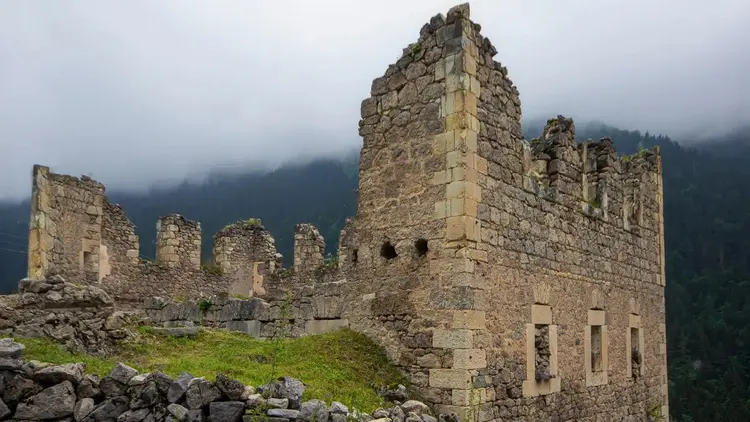
As the mines lost their importance and social conditions changed, Santa began to decline. The final break came with the 1923 population exchange between Türkiye and Greece, when the Greek Orthodox residents left and the settlement was left almost empty—a sharp end for a place where, by some estimates, around 5,000 people lived between about 1700 and 1900.
That history explains the silence.
Workshops, churches and daily life once filled these slopes. Now it’s mostly the sound of nature.
4. Stone houses, churches and fountains
Santa’s appeal? The ruins aren’t a single monument. Stone houses, churches, fountains, bridges and other buildings are scattered across the slopes, giving a sense of how busy the place once was.
Nature doesn’t hide the buildings. It works with them. In spring and summer, when the slopes turn green, streams run through the valleys and waterfalls drop from higher up, the stone walls get a natural frame. History lovers, hikers and photographers all find something here.
5. Visiting Santa today
The ruins are an archaeological and natural conservation area, declared in 1999 and registered in 2020 as a fragile area to be protected. Illegal digging and neglect have damaged parts of it, which is frustrating for a place this delicate. So treat the site with care: don’t climb on walls, don’t take pieces away; leave the environment as you found it.
Don’t expect facilities. Bring what you need.
No large crowds. No souvenir-shop strip, and nothing resembling a tourist complex—just quiet paths, old stone buildings and mountain views. For travelers who want something other than the standard sights, that’s exactly the point.
6. How to get to Santa
The trip starts in Gümüşhane, and the village to aim for is Dumanlı. Reports describe the road from Gümüşhane toward Yağmurdere and the plateau roads that climb up to Santa, while the Gümüşhane Chamber of Commerce travel guide gives a route via Arzular, Yayladere village, Kosdan Mountain and Taşköprü Plateau. Public transport is limited. Put simply, a car is the practical choice. Since the area is lived in mostly in summer, go between late spring and early autumn, and check road conditions with locals first. Gümüşhane’s official guides put Santa on routes alongside Taşköprü Plateau, Çakırgöl and the Sarıçiçek village rooms, so it slots easily into a longer trip.
7. For anyone who wants the quiet side of the Black Sea
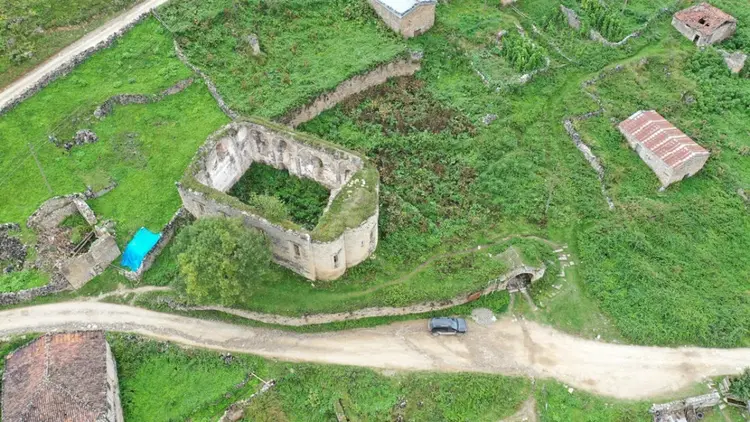
Santa never tries to be showy. It doesn’t need to. Centuries-old stone structures are slowly being taken over by the forest, and what was once a busy mining settlement is now a hushed heritage site. A town of thousands in the 19th century, a place that comes back to life mostly in summer today: that contrast is the real draw.
Looking for one of Gümüşhane’s lesser-known routes, away from crowds and close to the history of the Black Sea highlands? Santa Valley belongs on the list.
Sources: Hürriyet Daily News, Santa ruins registered as fragile area, Daily Sabah, Santa Ruins awaits restoration, GoTürkiye, Gümüşhane

Bir yanıt yazın