
Blue Cruise Turkey: What It Is, Routes and Duration


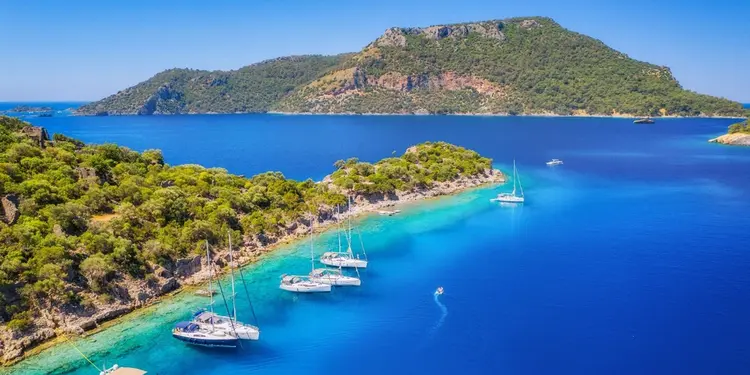
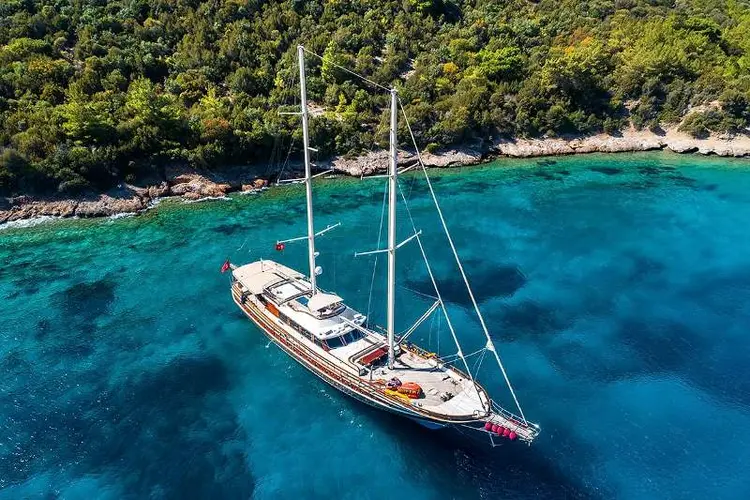
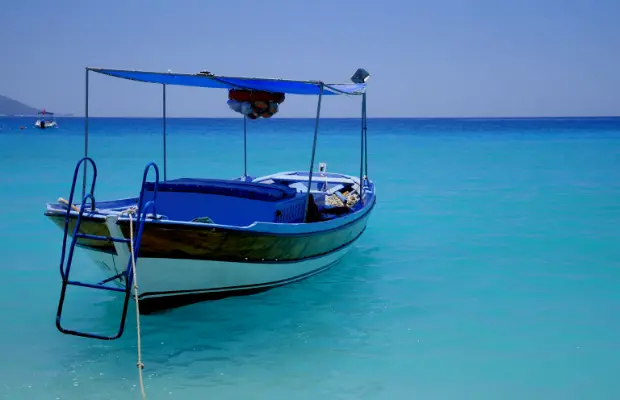
A Blue Cruise, known in Turkish as Mavi Yolculuk or Mavi Tur, is a sea voyage along Türkiye’s Aegean and Mediterranean coast on a gulet (a traditional wooden sailing boat), a yacht or a smaller boat. The season runs from late spring to early autumn, and the days are spent anchoring in quiet coves and swimming off the stern. A Blue Cruise Turkey trip can last a single day or more than a week, and the whole idea traces back to a writer exiled to Bodrum.
1. Blue Cruise Turkey: What It Is and Where It Began
It began in the 1940s. The writer Cevat Şakir Kabaağaçlı, who wrote as Halikarnas Balıkçısı (“the Fisherman of Halicarnassus”), had been exiled to Bodrum in 1925 and fell for the coast. In 1946 he sailed the Gulf of Gökova with a group of friends that included the poet-painter Bedri Rahmi Eyüboğlu and the writer Sabahattin Eyüboğlu, who is credited with the name Mavi Yolculuk, “Blue Voyage”. Azra Erhat’s book of the same title later carried the phrase to a wider readership. Those first trips used fishing boats.
Despite the name, a Blue Cruise has nothing to do with cruise ships. Today the term covers any leisurely cruise along the Turkish Riviera, usually with a crew, a cook and a gulet built in the Bodrum shipyard tradition. Plenty of itineraries also slip across to the nearby Greek islands.
2. Which Routes Does a Blue Cruise Cover?
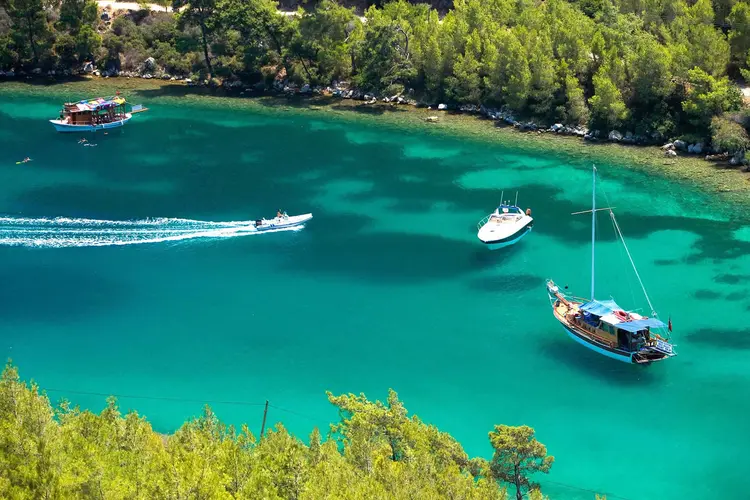
Bodrum is the classic starting point, and not by accident. Its coves, its history and its boatbuilding make it the first name that comes up. Other major departure ports: Göcek, Fethiye, Marmaris, Datça and Bozburun. From Bodrum, the typical itineraries take in Gökova Bay, Hisarönü Bay, the Greek islands, the stretch from the Seven Islands to İngiliz Limanı (English Harbor) and a short or long Fethiye-Göcek loop.
Hisarönü Bay coves
- İnce Burun
- Aktur
- Bencik
- Emel Sayın Koyu
- Dirsek Bükü
- Datça Palamutbükü
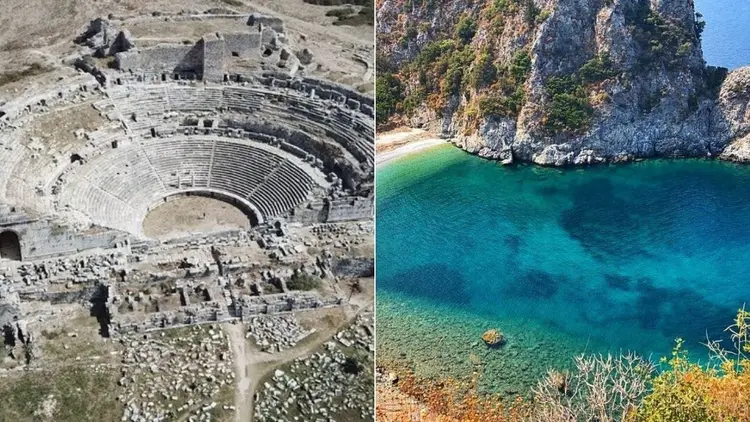
- Knidos (Cnidus), the ancient city at the tip of the Datça peninsula
- Poyraz Limanı
- Meteor Koyu
- Akvaryum Koyu (Aquarium Bay)
Knidos stands out. It is the one stop on this list that is also an official archaeological site, and the Turkish Museums page for the Knidos Archaeological Site places the ruins on the Tekir headland, where the Aegean meets the Mediterranean. Boats and yachts, the page notes, reach it throughout the tourism season.
Gökova Bay coves
- Orak Island
- Yedi Adalar (Seven Islands) coves
- Uzun Liman
- Tuzla Koyu
- Löngöz Koyu
- Değirmenbükü Koyu
- İngiliz Limanı (English Harbor)
- Sedir Island, also called Cleopatra Island
- Kargılı Koyu
- Alakışla Bükü
- Pabuç Burnu
Greek islands route
- Bodrum harbor (departure)
- Kos
- Leros
- Patmos
- Lipsi
- Kalymnos
- Turgutreis, Bodrum (return)
Bring a passport. Crossing to the islands involves border formalities, so check the visa rules for your nationality before booking. A sea view doesn’t waive passport control. The Gökova and Hisarönü loops are the opposite case: every cove on those two lists is on the Turkish coast, so no border crossing is involved.
Fethiye-Göcek coves
- Yassıcalar Island
- Tersane Island (Dockyard Island)
- Panço Koyu
- Kleopatra Hamamı Koyu (Cleopatra’s Bath Cove)
- Sarsala Koyu
- Bedri Rahmi Koyu
- Sıralıbük
- Kelebekler Vadisi (Butterfly Valley)
- Ölüdeniz
- Kayaköy (the abandoned Greek village above the coast)
- Nikola Island
- Turunç Koyu
- Ağa Limanı
3. How Many Days Does a Blue Cruise Last?
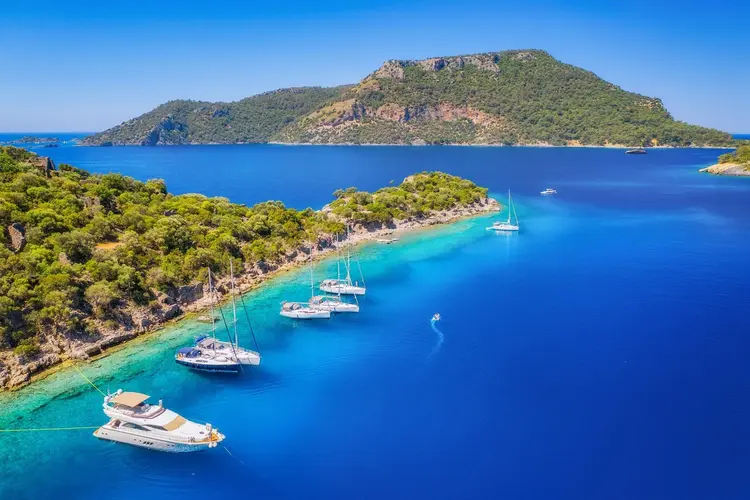
A typical Blue Cruise lasts three to seven days, and many operators treat a week as the standard. Beyond that, there’s no fixed rule; it comes down to the operator and the route.
What if a week sounds like too much, or not enough? Not every trip fits that window. Shorter outings of one or two days exist, and so do voyages of more than a week for travelers who want to cover several gulfs or add the Greek islands to the itinerary. For a short mini-cruise, the Fethiye-Göcek route is the usual choice. Gökova and Datça suit longer ones.
4. Why Choose a Blue Cruise?
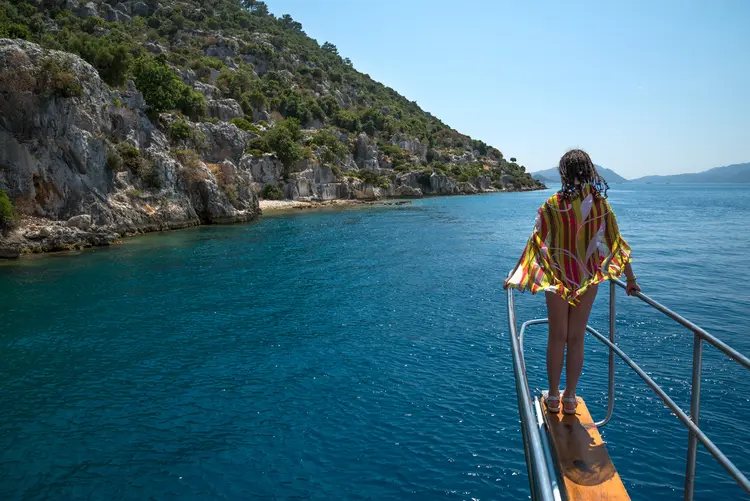
The honest answer: access.
Many of the coves above have no road, so a boat is the only way in, and the anchorage is often empty by evening. No hotel crowds, either: on a private charter you share the boat only with the people you came with, and meals and swim stops follow your own pace rather than a timetable. The setting does the rest. Pine-covered slopes drop straight into blue water, and a typical day mixes swimming, a long lunch on deck and an afternoon at a ruin or a village. The pace is the point, and it usually takes a day or two at anchor before it stops feeling like a schedule with nothing on it. For a slow, private holiday on the water, it’s hard to beat.
Sources: Wikipedia, Blue Cruise, Küre Ansiklopedi, Mavi Yolculuk, Turkish Museums, Knidos Archaeological Site


Bir yanıt yazın