
Arnavutkoy Istanbul: A Complete Guide


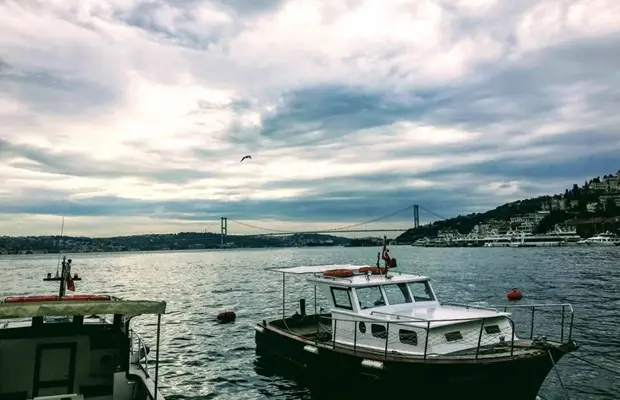
Istanbul never runs out of corners worth a slow afternoon, and one of the best is a narrow strip of the European shore between Ortaköy and Bebek. Arnavutköy sits right on the Bosphorus. It’s a village of wooden mansions, steep stepped streets and a waterfront lined with fish restaurants. This Arnavutköy Istanbul guide covers what makes it worth the walk.
1. Arnavutköy, Istanbul: the pearl of the Bosphorus

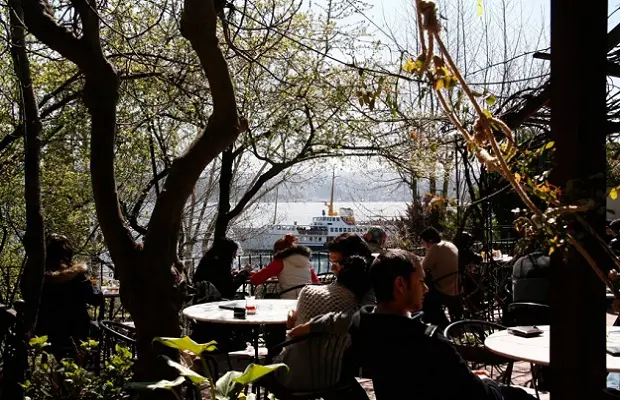
Walk north from Beşiktaş along the coast road, past Ortaköy and Kuruçeşme, and Arnavutköy appears with its row of historic yalis facing the water. Seafood restaurants and cafés line the waterfront from one end of the village to the other. Any season will do.
Newer, less graceful buildings have crept in over the decades. Only a handful, though. The old wooden houses, the stepped side streets and cobbled lanes, and the flower boxes spilling off the balconies give it the feel of a village someone simply forgot to modernize.
2. An authentic Bosphorus village

Arnavutköy belongs to the Beşiktaş district, on the European side of the Bosphorus. Don’t confuse it with the other Arnavutköy. The much larger district of the same name sits on the city’s northwestern outskirts and shares nothing else with it. Wedged between Kuruçeşme and the Bebek waterfront, with its upper streets climbing toward Etiler and Ulus, the neighborhood has kept its old-village character, much like Kandilli, Kanlıca and Vaniköy across the water on the Asian shore. Yalis line the water. The hillsides haven’t entirely surrendered to concrete.
3. A village of angels

The current name came late. In antiquity the area was called Hestiae, for the limestone quarries nearby, and later Promotu, after the Byzantine official Promotus, who built a villa here. By the 6th century it was known as Anaplus.
One name lasted longer than most. Melekler Köyü—the Village of Angels—was a nod to the area’s many churches and holy springs, among them the Church of St. Michael, said to have been founded by Constantine and to have held a mosaic icon of the archangel Michael.
4. Where the name comes from

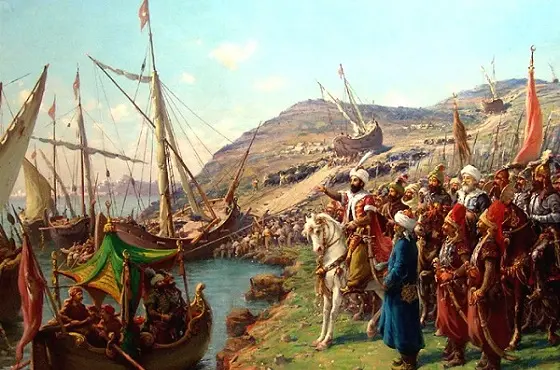
Under the Ottomans, the area answered to the judicial district of Galata. Under the Republic, it joined Beşiktaş. Its current name dates to the years after the Ottoman conquest of Constantinople in 1453. According to the Ottoman traveler Evliya Çelebi and later chroniclers, Sultan Mehmed the Conqueror resettled a community of Albanians here in 1468 to work on paving the city’s streets, and the village took its name—”Albanian village”—from them. Until then it had been a small fishing settlement built around a few holy springs. The name stuck.
5. A favorite escape for the city

In Byzantine times the hills above Arnavutköy were covered in vineyards. Under the Ottomans, strawberries took over. Small, and less juicy than the ones grown elsewhere in Türkiye, they were famous anyway, famous enough that the groves were kept as a sultan’s preserve. From the 16th century on, chroniclers describe the hillside orchards and gardens drawing city residents out for the day. Through the mid-19th century it was known as a tidy, lively Greek village; by the late Ottoman period it had also picked up the nickname “Little Beyoğlu.” The reason: taverns and nightlife.
6. A patchwork of communities

Until the mid-19th century, Arnavutköy’s population was mostly Greek and Jewish; Muslim residents began settling in greater numbers only under Sultan Mahmud II. The numbers tell the story. A 1912 census records the district at 7,482 residents: about 5,973 Greek Orthodox Christians, 493 Muslims, 342 Armenians, 32 Jews and the rest other nationalities. A thoroughly mixed village, then.
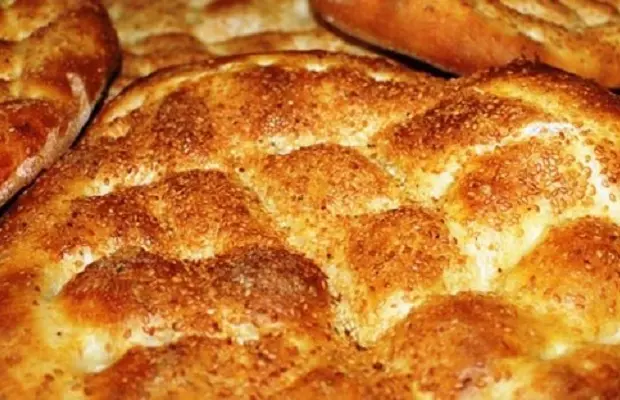
Evliya Çelebi, writing in his travel book, the Seyahatname, described Arnavutköy’s bread and biscuits as the whitest in the city, its Jewish residents as cultured music-lovers, its Greek Christians as the largest group, and its Muslim community as the smallest.
7. The road that changed everything

Old Arnavutköy was known for its holy springs, vineyards, hillside pavilions and the row of yalis along its shore. Little of that survives today. What happened? Short version: the road won. After the 1960s, the narrow lane connecting Ortaköy to Arnavutköy could no longer handle traffic, so much of the waterside building stock was torn down to make room for a proper coast road. Wooden houses came down. Concrete ones went up in their place. Fires did their share of damage over the years, and more recent construction kept chipping away at the old skyline. After 1980, when the coast road was widened again using landfill driven into the Bosphorus itself, the yalis that remained were technically no longer waterfront at all—the sea had been pushed back from their front doors. Most people strolling the waterfront now walk right over that landfill without realizing the houses beside them once stood at the water’s edge.
8. The largest yali on the shore

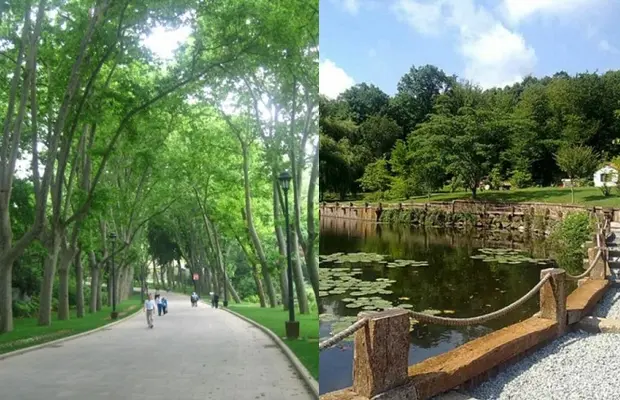
Arnavutköy is best known for its collection of yalis and grand waterside mansions—wooden houses built directly on the water, a Bosphorus building type unique to Istanbul. The largest is the Ayvazpaşazade yali. Also known as the Ali Vafi mansion, it was bought in 1915 from an Armenian banker by Ali Vafi Bey, a Cretan Ottoman official. It’s built around two large belvedere towers flanked by two smaller ones, with a wooded grove, Ali Vafi Korusu, behind it. Fire took the original in 1919. The version standing today was rebuilt true to the original design in the 1980s.
9. The Taksiarhis Greek Orthodox church

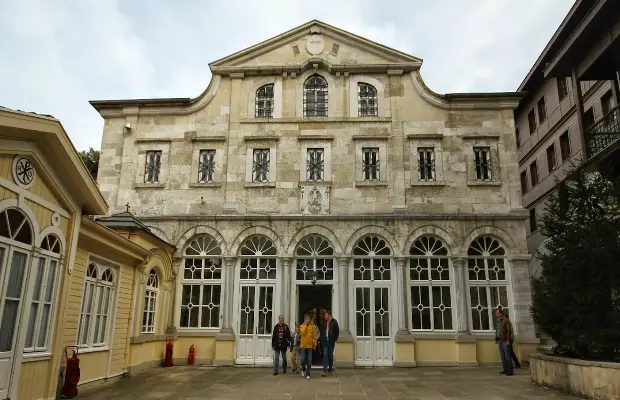
On the square near the waterfront stands the Taksiarhis Greek Orthodox Church, built in its current form between 1896 and 1899 and dedicated to the Archangel Michael, the same archangel behind the old Village of Angels name, who wealthy local Greeks believed held healing power as far back as the 16th century. The site is older. Records suggest a church stood here long before the current building. How much older is hard to say: no Byzantine-era inscription survives. An inscription credits the 1899 reconstruction to Muzuros Paşa, whose family burial plot sits on the south side of the nave.
10. The Tevfikiye Mosque

Right on the coast road, next to the police station, stands the Tevfikiye Mosque, an Ottoman-era building. Locally it also goes by the Arnavutköy Mosque or the Akıntıburnu Mosque, after the point of strong current just offshore. The Directorate of Foundations owns it. Its architect is unrecorded. Tradition holds that Sultan Mahmud II had it built for his son, Şehzade Tevfik, so that the Muslim soldiers garrisoned nearby—in a neighborhood that had almost no Muslim residents at the time—would have somewhere to pray.
Construction began in 1832 and the mosque opened in 1838. Set it beside the Taksiarhis church and the two buildings tell the village’s story from opposite ends: the church, rebuilt in the 1890s, served a Greek Orthodox majority that still numbered close to 6,000 in 1912, while the mosque was built decades earlier for a garrison in a neighborhood with barely any Muslim residents.
11. The İzzetabad Pavilion

Known locally as the “Painted Kiosk,” the İzzetabad Pavilion was first built in 1791 on a terrace above the water for Grand Vizier Hacı Mehmed İzzet Paşa of Safranbolu. Seven years later it burned. Rebuilt, it was later used by Sultan Selim III and Sultan Mahmud II. Under Sultan Abdülmecid it was torn down again in the 1840s and rebuilt for Mahmud II’s granddaughters, the princesses Feride and Seniye. It was sold in 1968. Demolition followed in 1975, to make way for a planned housing block, a plan the Bosphorus zoning law of the time blocked. It’s had a rough two centuries. The plot changed hands again in 1989, and the pavilion was rebuilt once more in 1992 in the simple, elegant style of its 1791 original—the version still standing on the Bosphorus today.
Sources: Wikipedia: Arnavutköy, Wikipedia: Yalı


Bir yanıt yazın