
8 Best Botanical Gardens in Turkey to Visit


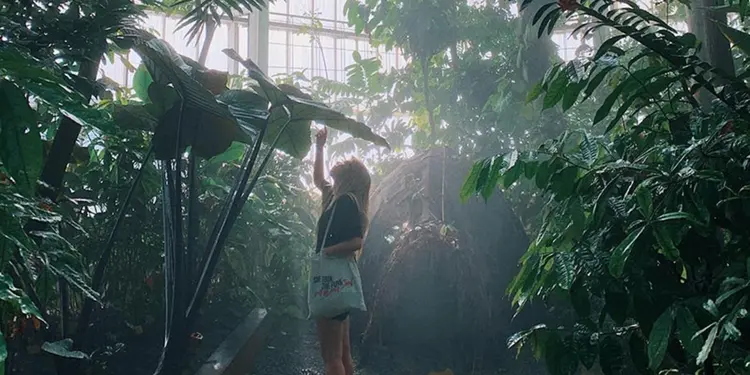
A botanical garden does more than grow plants: it labels them by scientific name, common name and homeland, and turns a green space into a living library. The botanical gardens in Turkey are mostly run by universities, so many double as research sites, and several of the best are in Istanbul. Here are eight worth knowing, from vast forest arboretums to a small Japanese garden on the Bosphorus.
1. Atatürk Arboretum, Istanbul

The forest scientist Hayrettin Kayacık proposed this arboretum in 1949. Funding gaps slowed the work. It only opened on July 12, 1982, the centenary of Atatürk’s birth. It covers about 296 hectares (730 acres) at Bahçeköy, in Istanbul’s Sarıyer district on the edge of Belgrad Forest, where native species grow alongside trees from very different climates, all laid out as an open-air museum of woody plants. The land belongs to Türkiye’s General Directorate of Forestry, with Istanbul University’s forestry faculty as its scientific partner. Check the opening days first. It has traditionally closed one day a week, and a locked gate at the edge of a forest is a long way to travel for nothing.
2. Ege University Botanical Garden, İzmir

In İzmir, on Türkiye’s Aegean coast, Ege University runs a botanical garden and herbarium under its Faculty of Science. Its collection is reported at close to 3,000 plant species, with an ornamental-plant greenhouse, research greenhouses and beds of tropical and exotic plants that students use for their studies.
Outside visitors are welcome. Book an appointment first, though.
3. Alfred Heilbronn: Turkey’s oldest botanical garden, now closed

This one is a memory. Not a destination. Founded in 1935 by the German-born botanists Alfred Heilbronn and Leo Brauner at Istanbul University, it’s described as the oldest botanical garden in the country. On roughly 15,000 m² (about 3.7 acres) near the Süleymaniye Mosque, it held six sections, a herbarium, a botanical library, a seed bank and a research laboratory, with more than 5,000 plants, many of them endemic.
Ownership was transferred to Türkiye’s Presidency of Religious Affairs, as reported in 2017, and the university said in 2018 that its classrooms and labs would move to another campus. And the collection itself? What has become of it since is honestly hard to say.
After more than 80 years of teaching and research, it’s a quiet ending.
4. Karaca Arboretum, Yalova

Not every garden here belongs to a university or the state. Yalova, a short ferry ride across the Sea of Marmara from Istanbul, is home to Türkiye’s first private arboretum, opened in 1980 on 13.5 hectares (about 33 acres) by Hayrettin Karaca, a businessman who became one of the country’s best-known environmentalists. The collection is put at around 7,000 species, subspecies, varieties and cultivars.
It’s especially strong in maples (Acer), apples (Malus), cherries and plums (Prunus), magnolias, birches (Betula) and pines (Pinus). Karaca planted his collection to outlive him. It still welcomes visitors. Confirm visiting arrangements before the trip.
5. Balkan Arboretum, Edirne

Edirne sits in Türkiye’s far northwest. The Greek and Bulgarian borders are close. Here Trakya University runs the Balkan Arboretum together with the EDTU Herbarium, where dried plant specimens are stored, and the arboretum does double duty: a living tree museum on one side, an outdoor lab for students on the other.
The public gains too. Local residents and visitors get a chance to meet endemic plants of the region up close.
6. Süleyman Demirel University Botanical Garden, Isparta

Türkiye is unusually rich in endemic plants, and this garden in Isparta, in the southwest’s Lakes Region, shows off many of them.
Run by Süleyman Demirel University (SDU), it is a working teaching garden first, and it displays plants from Türkiye and from around the world in scientific order, spread across sections that include greenhouses, medicinal plants, aromatic plants and endemic species. Students use it for research. Public visits are on set days.
7. Baltalimanı Japanese Garden, Istanbul

Come in April, when the cherry trees bloom.
This 6,137 m² (about 1.5-acre) garden in Baltalimanı, in Istanbul’s Sarıyer district near the Bosphorus, was created through cooperation between Türkiye and Japan and is managed by the Istanbul Metropolitan Municipality. The Atatürk Arboretum, elsewhere in the same district, covers roughly 480 times as much ground. The planting is small but deliberate: 37 Japanese cherry (sakura) trees, 36 maples and 5 pines. Entry is free. Hours vary between weekdays and weekends.
8. Nezahat Gökyiğit Botanical Garden, Istanbul

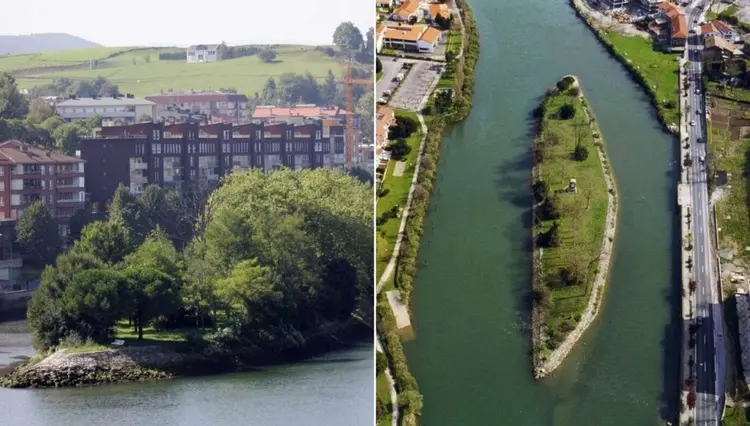
The garden began in 1995, when businessman Ali Nihat Gökyiğit set out to create a memorial park for his wife, Nezahat Gökyiğit. The cleared ground was replanted with tens of thousands of trees and shrubs, and the site opened to the public in the early 2000s under its current name. Its location is, frankly, odd. The garden sits in Ataşehir, on Istanbul’s Asian side, at the junction where the motorways from the Bosphorus and Fatih Sultan Mehmet bridges meet the Anatolian Motorway toward Ankara. It’s built on eight “islands” of land between the main roads and the ramps. Few botanical gardens anywhere are surrounded by more traffic. Visitors are welcome, and the garden also works as a research and education center.
Sources: Wikipedia, Atatürk Arboretum, Wikipedia (Turkish), Alfred Heilbronn Botanical Garden, Habertürk, Karaca Arboretum report







Bir yanıt yazın