
Blood Falls: Why This Antarctic Glacier Bleeds Red


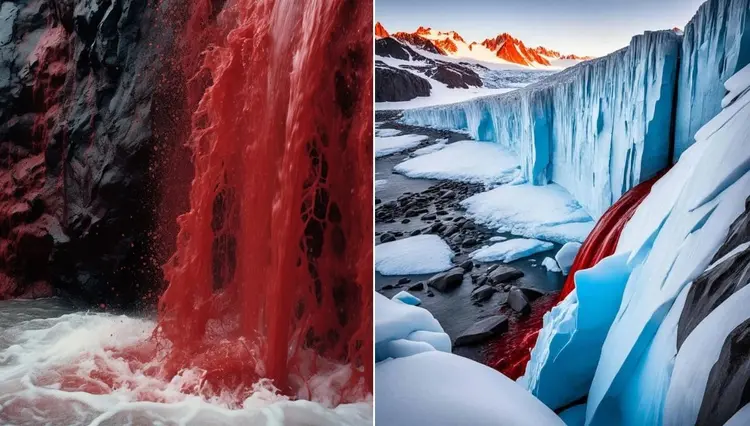
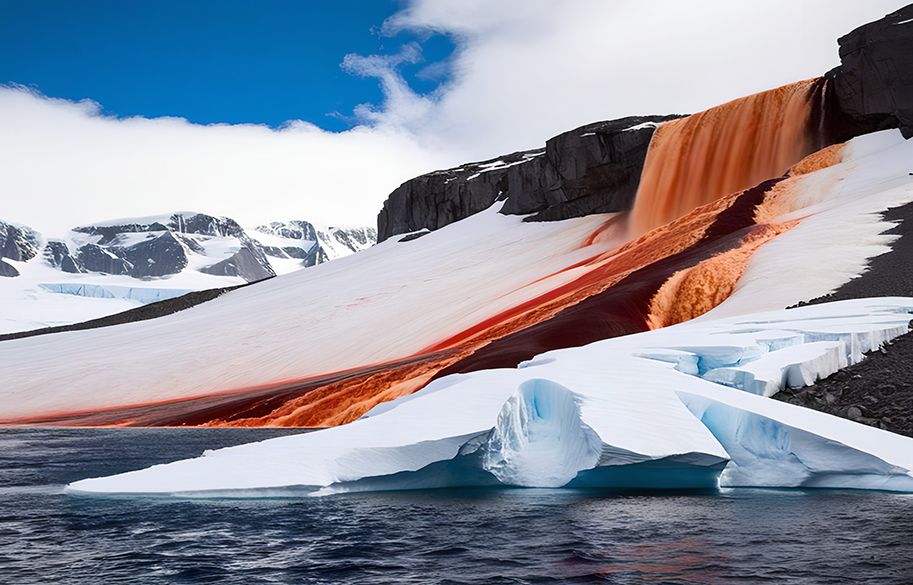
Antarctica is about as white as a continent gets, so a stream of blood-red liquid oozing out of a glacier tends to stop people in their tracks. That is Blood Falls, a rust-colored outflow at the tip of Taylor Glacier in the McMurdo Dry Valleys. It looks like a scene from a horror film, but the real explanation involves ancient seawater, iron, and microbes that live without oxygen.
1. 1911: Griffith Taylor finds a glacier that seems to bleed
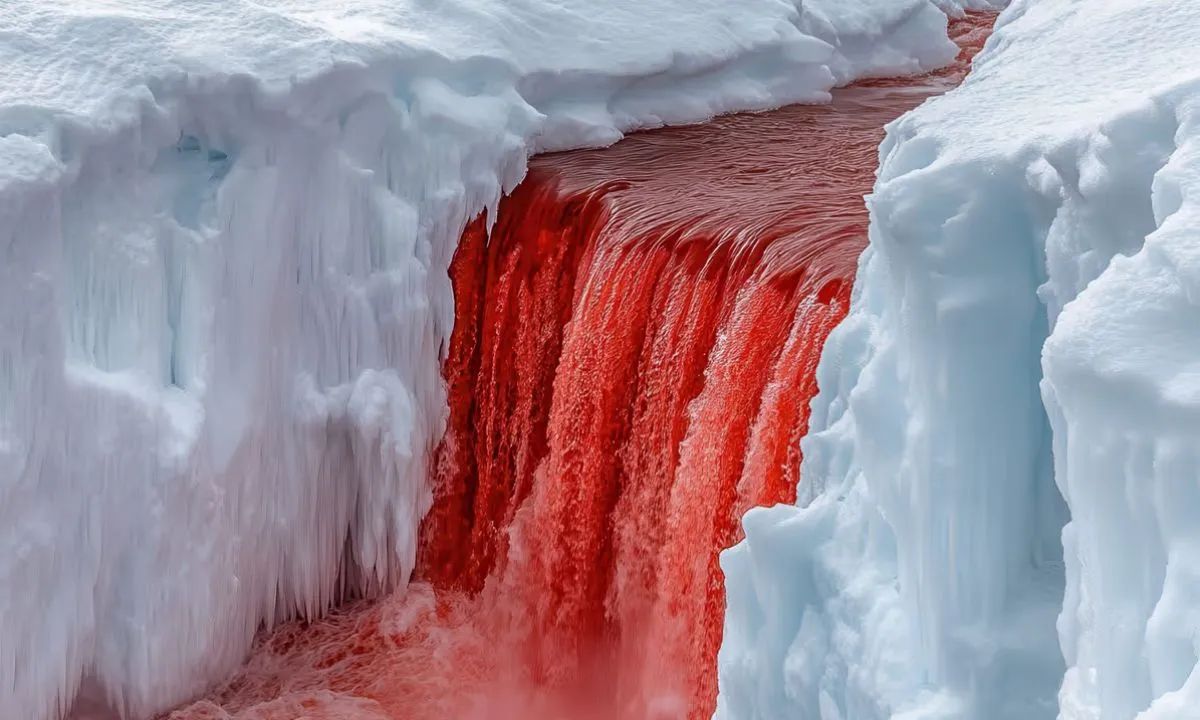
The first person to describe it was Thomas Griffith Taylor, an English-born Australian geologist on the British Terra Nova Expedition. In 1911, while exploring the valley that now carries his name, he came across a red stain spilling from the end of a glacier onto a frozen lake. He called it Blood Falls.
Hard to argue with that.
Taylor and his team guessed that red algae were behind the color, a reasonable idea at the time, but with the tools available on a polar expedition in the early 20th century they could not test it much further. His notes and samples put the strange red outflow on the scientific map, and the puzzle would keep researchers busy for about a century.
2. Where the red water comes from: iron that rusts on contact with air
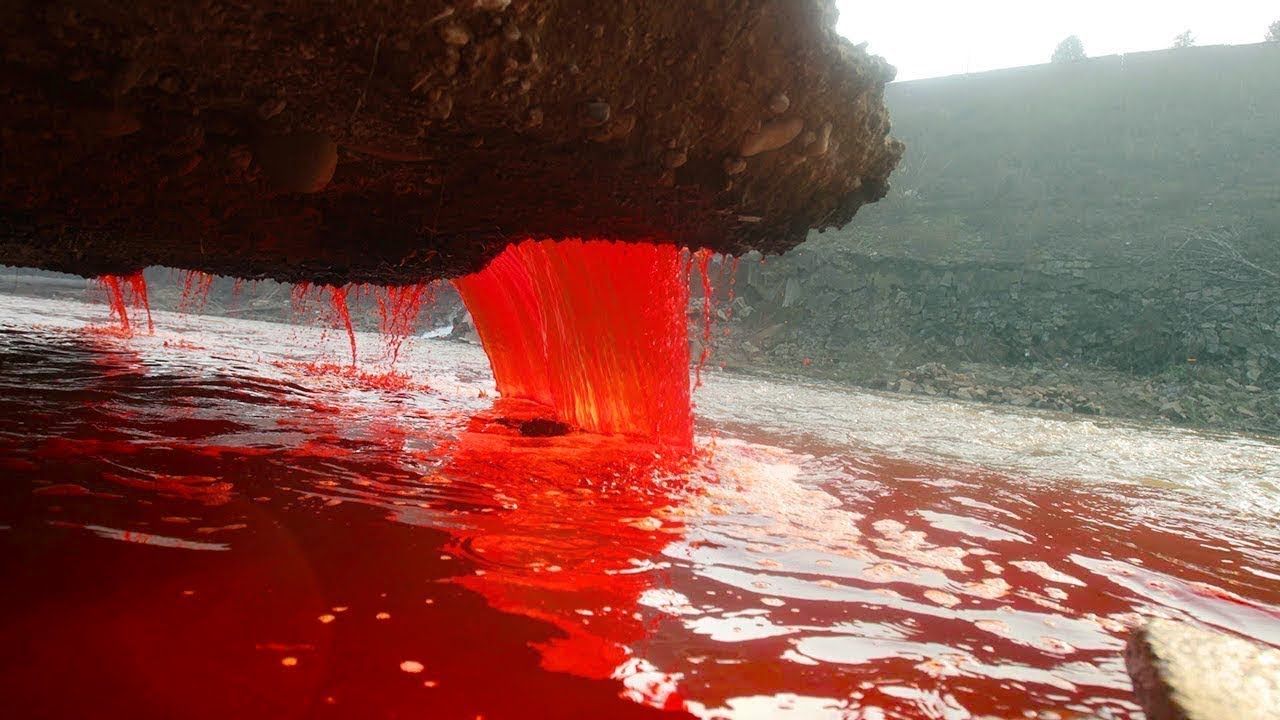
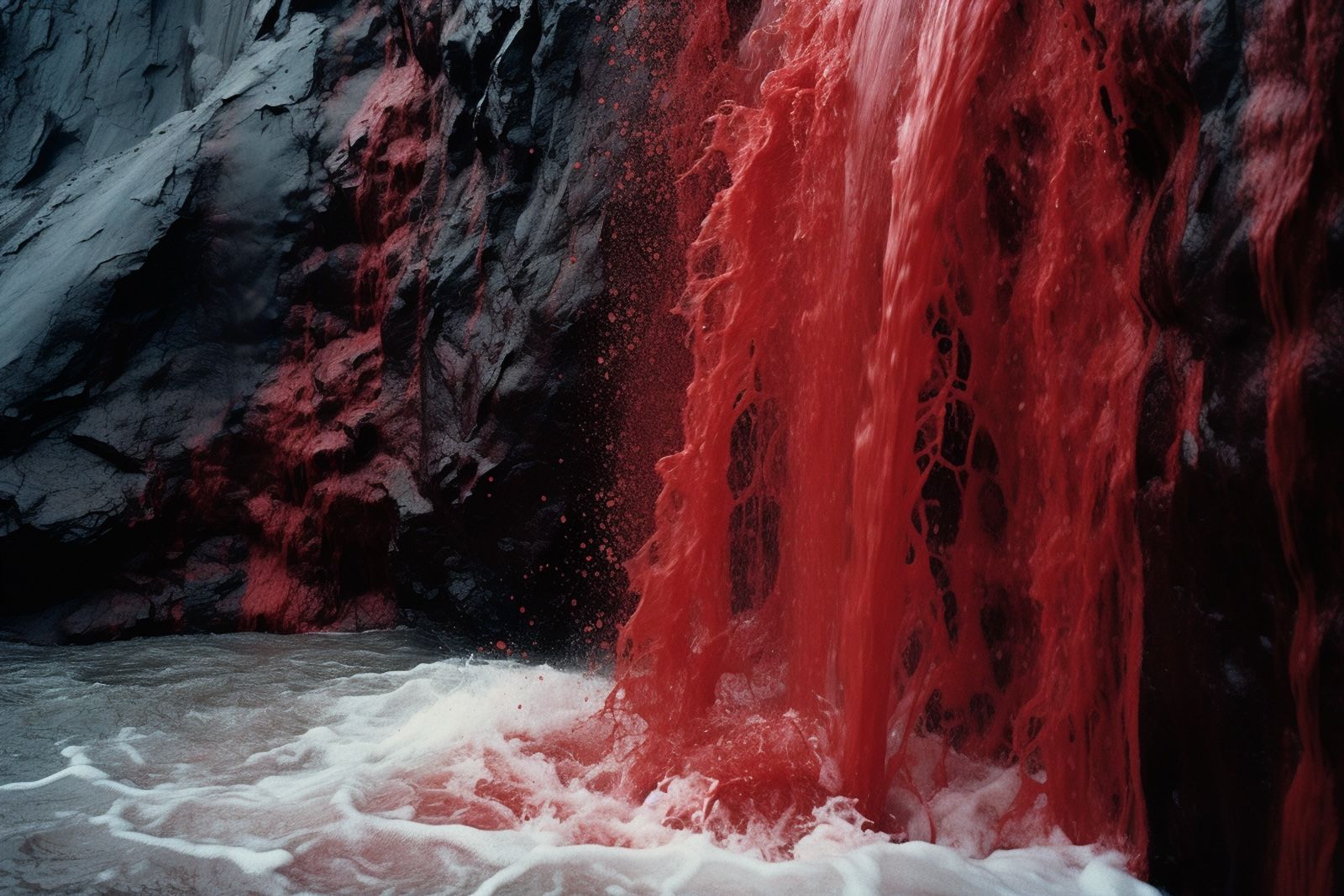
Photos of the falls tend to prompt words like blood and gore, and almost nobody’s first guess is rust. Seen up close, the mystery turns out to be chemistry. Blood Falls seeps from the terminus of Taylor Glacier and spreads across the ice-covered surface of West Lake Bonney. The algae theory was simply wrong. The liquid is a brine, old seawater that was trapped under the glacier long ago, and it carries a lot of dissolved iron. Underground, with almost no oxygen around, that iron stays dissolved and the water looks fairly clear, but once the brine reaches the surface and meets the air, the iron oxidizes. In plain terms, it rusts. The iron oxides then paint the ice that familiar reddish-brown.
So the glacier is not bleeding. It is rusting in public.
3. How does the brine stay liquid in a frozen desert?
The McMurdo Dry Valleys are among the coldest, driest places on Earth, so flowing water should not exist here. The answer is salt, plain and simple. The brine feeding Blood Falls is two to three times saltier than average seawater, which pushes its freezing point well below that of fresh water; a sample taken in 2014 was about −7 °C (19 °F) and still liquid. There is a second trick. When part of the brine does freeze, it releases heat, and that heat warms the colder ice around it, helping the water melt a path and keep moving. Glaciologist Jessica Badgeley, lead author of a 2017 study, put it this way: “While it sounds counterintuitive, water releases heat as it freezes, and that heat warms the surrounding colder ice.” Her team concluded that “Taylor Glacier is now the coldest known glacier to have persistently flowing water.”
Then came a bigger surprise.
The brine is not sterile. Researchers found a community of microbes living in it, with no sunlight and almost no oxygen. Instead of breathing oxygen, these organisms get their energy by working with sulfate and iron compounds dissolved in the water.
4. Why Blood Falls matters for the search for life on Mars and Europa
If life can hang on in dark, salty, oxygen-starved water beneath an Antarctic glacier, similar pockets elsewhere in the solar system look a lot more interesting. Mars and Europa top the list. Mars has ice at its poles, and Jupiter’s moon Europa is thought to hold an ocean under its icy crust. Microbiologist Jill Mikucki, who has studied Blood Falls for years, summed up the appeal: “The subsurface is actually pretty attractive when you think about life on other planets.” A hostile surface does not rule out life underneath.
The falls are only the outlet. Using electromagnetic and radar surveys, researchers have traced a network of brine running beneath Taylor Glacier, a hidden river of sorts that flows unseen under the ice until it eventually surfaces at the falls.
5. The reservoir below: how deep does it go?
According to reporting on the research, the outflow is the mouth of brine aquifers that reach roughly 180 meters (about 600 feet) below the surface, and a deeper salty reservoir may exist beyond what instruments can detect. The thick ice is the problem. It makes direct drilling and measurement slow and difficult. Firm answers are hard to come by here, and many questions are still open.
When Griffith Taylor first saw the red stain more than a century ago, he had no way of knowing it would end up in studies about life on other worlds. He reached for algae; the real answer turned out to be salt, iron and a living microbial community. Today Blood Falls is both a striking sight and a natural laboratory for life under extreme conditions.
Not bad for a stain on the ice.
Sources: Wikipedia, All That’s Interesting





Bir yanıt yazın