
7 Mountain Monasteries With Breathtaking Views


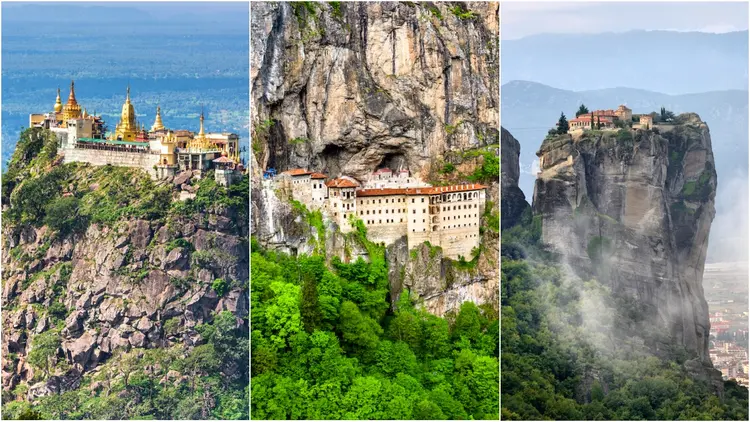
Monks and nuns have long chosen distance as a spiritual tool, and some built their homes on cliffs and summits that still seem impossible to reach. How the stones got up there is part of the mystery. These seven mountain monasteries, from Sümela in Türkiye to Tiger’s Nest in Bhutan, remain as striking for their views as for their history.
1. Sümela, Türkiye
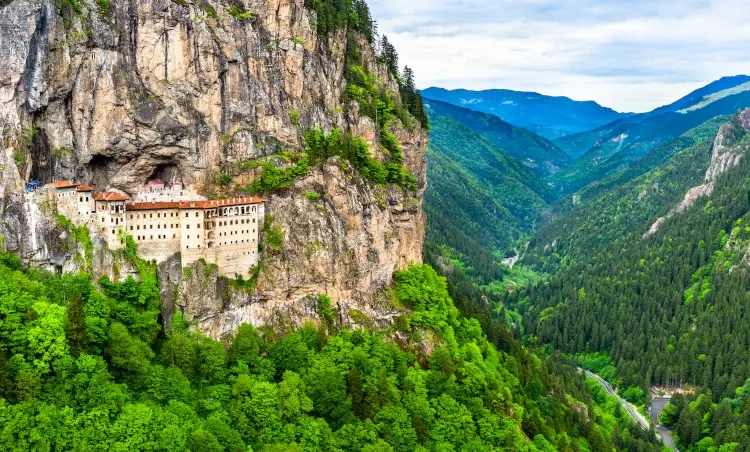
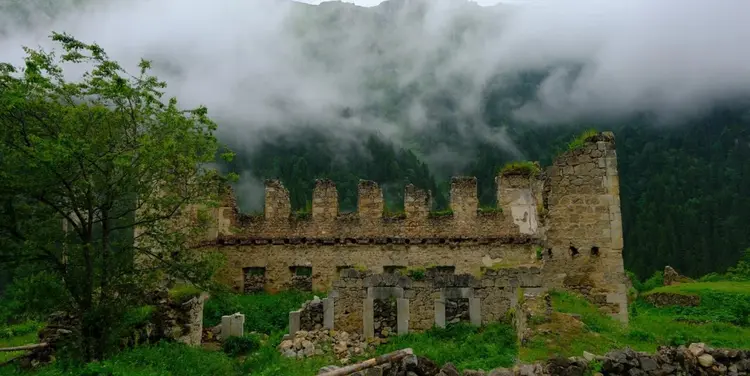
Sümela Monastery sits in the Altındere Valley near Maçka, in Trabzon province, at roughly 1,200 meters above sea level. Tradition credits two Athenian monks. Barnabas and Sophronios are said to have founded it in the 4th century, and the Turkish Ministry of Culture and Tourism dates it to around AD 386. Abandoned in the 1920s, the Greek Orthodox complex of a church and monastery was later restored, then closed to visitors in 2015 for a long rock-stabilization and fresco-cleaning project that kept it shut until it reopened in 2019. Turnout since has been remarkable. More than 514,000 people visited in 2025.
2. Holy Trinity Monastery, Greece
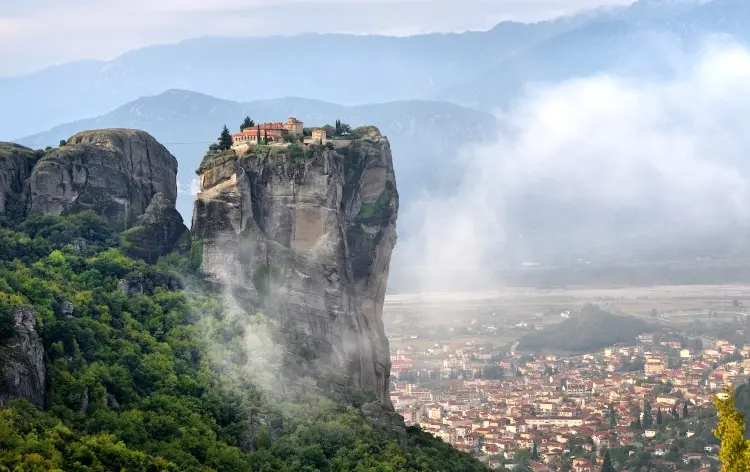
Holy Trinity is one of the monasteries of Meteora, a UNESCO World Heritage Site since 1988, and it stands on a sandstone pillar above the town of Kalambaka (also spelled Kalabaka), where it has become one of the best known of the group. Part of the reason is visible. The pillar drops away steeply on every side.
Meteora is not a single monastery, though the name often gets used as if it were. It once held 24. Most were founded in the second half of the 14th century, and only six survive today. Nearly all were built on the natural sandstone pillars that tower over the valley below. Why go to that much trouble? The same distance from the world that drew the first hermits up here.
3. Key Monastery, India
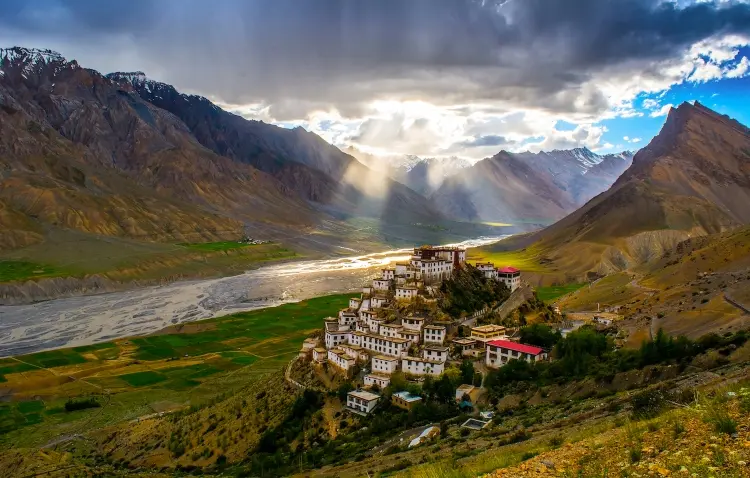
At about 4,166 meters above sea level, Key Monastery stands in the Spiti Valley of Himachal Pradesh, roughly 12 km north of the town of Kaza. Its roots reach the 11th century. It is Spiti’s largest monastery. Inside, the three-floor complex holds centuries-old murals, manuscripts and Buddha images. At that altitude, even a short walk between its buildings tends to feel longer than it looks.
Over the centuries, Mongol raiders, wars and fire damaged it again and again, a strong earthquake added to the toll in 1975, yet it still works as an active monastery. Stubborn is the word.
4. Taung Kalat Monastery, Myanmar
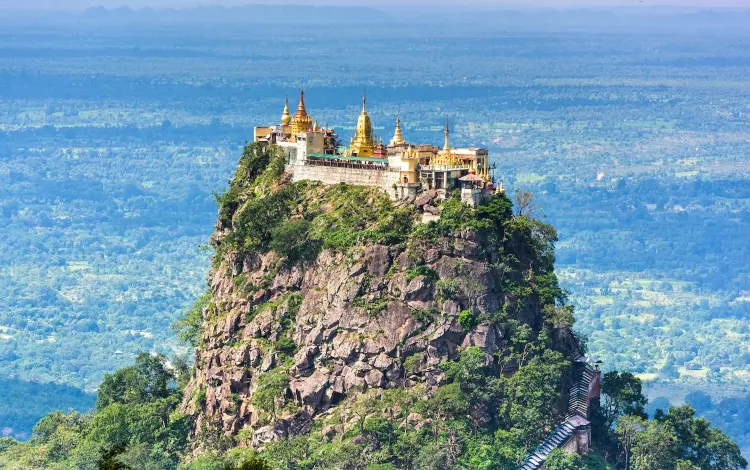
Taung Kalat is a Buddhist monastery on top of a sheer volcanic plug beside Mount Popa, a dormant volcano. The plug rises about 657 meters above sea level. A stairway climbs to the summit. It has 777 steps, so pace yourself. Local belief holds that the area is home to the nats, a pantheon of spirits worshipped in Myanmar alongside Buddhism, and many of the visitors who make the climb each year are pilgrims.
5. Tiger’s Nest, Bhutan
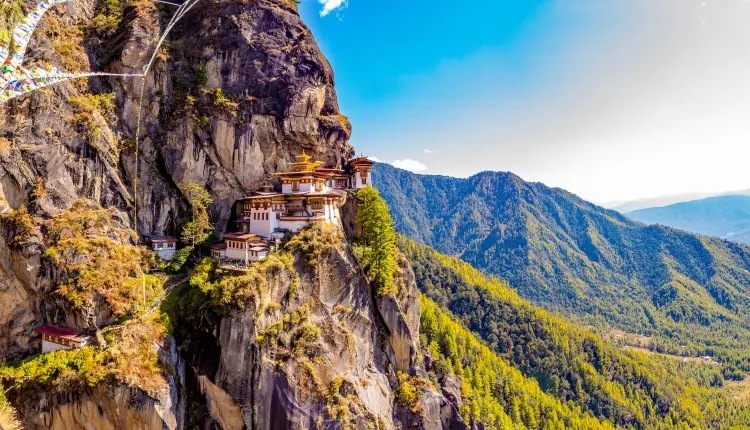
Paro Taktsang, better known as Tiger’s Nest, clings to a cliff roughly 900 meters above the Paro Valley, at about 3,120 meters above sea level. Then there is the legend. The master Guru Rinpoche, the story goes, flew here on the back of a tigress and meditated in a cave for three years, three months, three weeks, three days and three hours, though nobody quite agrees on the count. The dates on record are firmer. The monastery itself was built around that cave in 1692. Fire destroyed the main building in 1998. It was later restored. High as Tiger’s Nest sits, Key Monastery in India stands more than 1,000 meters higher still. Since March 2023, adult visitors pay a 1,000 ngultrum entrance fee, and on certain dates of the lunar calendar only Bhutanese citizens may enter.
6. Hanging Temple, China
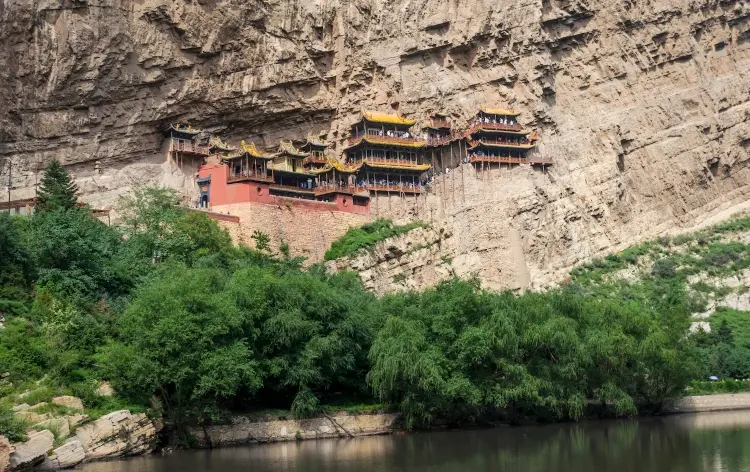
The Hanging Temple, or Xuankong Temple, is wedged into a cliff at the foot of Mount Heng (Hengshan) in Shanxi province. Legend dates construction to around AD 491. The real start date is harder to pin down. The genuinely odd part is the guest list. Few temples anywhere welcome three faiths at once, but here Buddhist, Taoist and Confucian traditions are all represented, and a hall inside enshrines Shakyamuni, Laozi and Confucius side by side.
After restoration work, it reopened to the public in May 2016. Crowds now come every year.
7. Montserrat, Spain
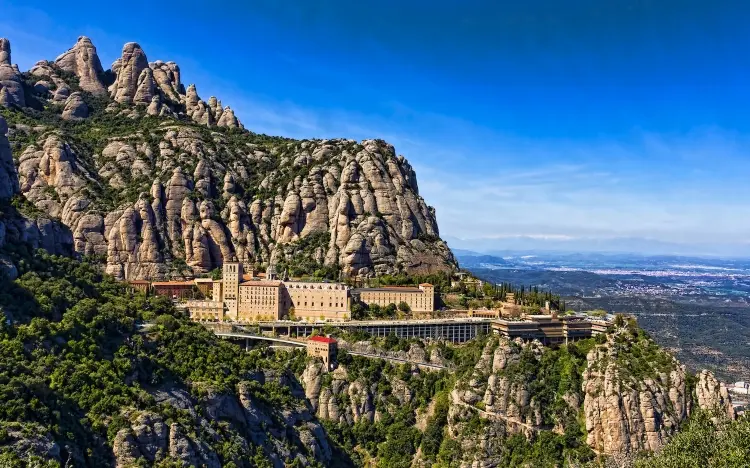
Santa Maria de Montserrat, the abbey’s full name, rises from a jagged mountain in Catalonia. Abbot Oliba of Ripoll founded it in 1025 on the site of an older hermitage. Its later centuries turned violent. During Napoleon’s invasion of Spain, French troops burned and looted it in 1811 and again in 1812, and more than a century later 22 of its monks were killed during the Spanish Civil War.
From the 1940s it became a symbol of Catalan identity. Language had a lot to do with it. When Catalan was restricted, Masses with public prayers in Catalan were held here.
Sources: Sümela Monastery (Wikipedia), Meteora (Wikipedia), Hürriyet Daily News on Sümela visitor numbers


Bir yanıt yazın