
37 Places to Visit in Turkey, From Ruins to Highlands


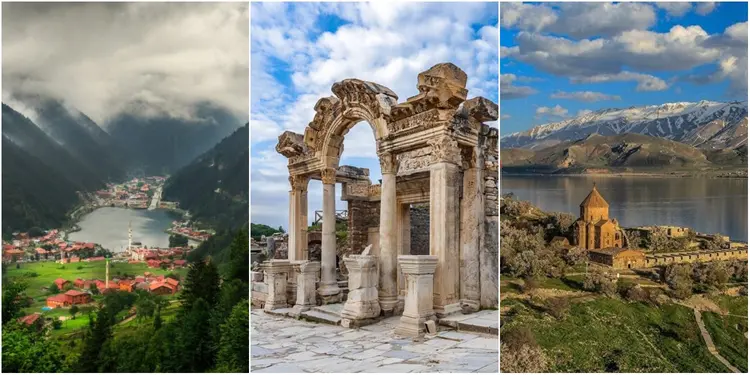
Few countries pack this many layers into one map. Türkiye sits on an old crossroads between Europe and Asia, and Hittites, Greeks, Romans, Byzantines, Seljuks and Ottomans all left something behind. These 37 places to visit in Turkey mix that history with lakes, canyons, caves and high green plateaus, from the Aegean coast to the far east of Anatolia.
1. Şirince, İzmir

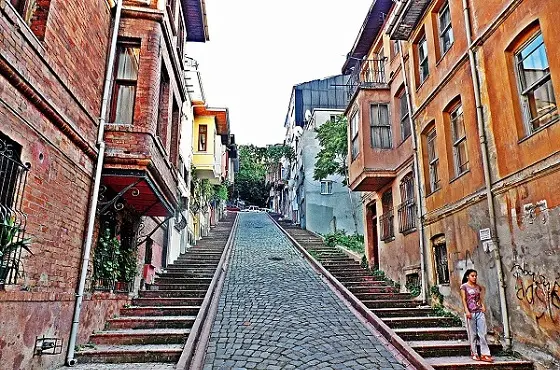
Şirince is a hill village in the Selçuk district of İzmir, a short drive from Ephesus. The road up winds through olive groves and tangerine trees. At the top, old Greek houses have kept their original architecture, and the village is known for fruit wines made from local harvests.
2. Topkapı Palace, Istanbul

Topkapı Palace stands on Sarayburnu, the point where the Bosphorus meets the Sea of Marmara. For roughly 400 of the Ottoman Empire’s six centuries, it was the seat of government and the home of the sultans.
By some accounts, as many as 4,000 people lived inside its walls at its height.
3. Harran, Şanlıurfa

Harran lies about 40 km southeast of Şanlıurfa, close to the Syrian border. In the 8th century it was a serious center of learning, where scholars worked on mathematics, medicine and philosophy and translated Greek and Syriac texts into Arabic. Tradition credits it with one of the first Islamic universities, a claim historians still debate. Today’s visitors come just as much for the beehive houses, conical mud-brick buildings rarely seen anywhere else in Turkey.
4. Blue Mosque (Sultanahmet Mosque), Istanbul

Built between 1609 and 1616, the Sultanahmet Mosque earned its nickname from the blue-toned tiles that cover its interior.
It is still a working mosque. Visitors take off their shoes at the entrance, women cover their hair, shorts and bare shoulders are not allowed, and the prayer hall closes to tourists during the five daily prayers, so timing a visit around them saves a wait.
5. Sümela Monastery, Trabzon

Picture a monastery glued to a sheer cliff some 300 meters above a forested valley. That is Sümela. Its first stones were laid in the Byzantine era, and the cultures that passed through the region kept adding to it for centuries.
The frescoes come from different periods and show scenes from the lives of Jesus and Mary. Inside the complex are the main rock church, a library, a sacred spring, chapels and the rooms where monks and students once lived. It is one of Turkey’s best-known historic sites abroad, and the setting does half the work.
6. Fairy Chimneys, Cappadocia

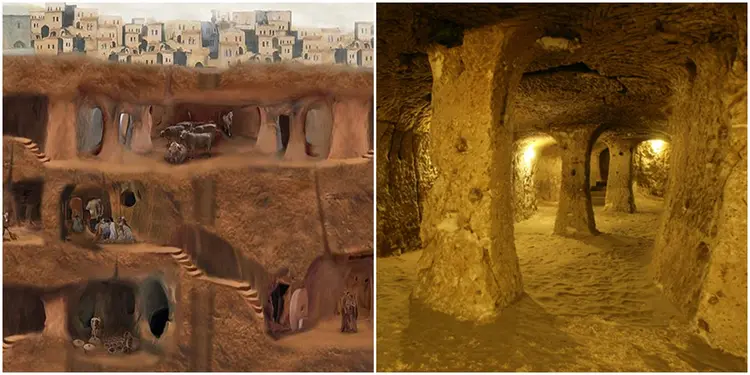
Cappadocia’s fairy chimneys were shaped by nature alone: over millions of years, rain and wind wore away soft layers of volcanic ash and left tall cones of rock standing. People moved in. Over the centuries they carved churches, shelters and monasteries into the rock, and underground caves and entire underground cities lie beneath the surrounding valleys. Where nature and history blur this completely, a first visit rarely feels like enough.
7. Hasankeyf, Batman

The Hasankeyf in this photo no longer exists.
The town on the Tigris was settled for thousands of years and reached its peak under the Artuqids, with the Ayyubids continuing the building boom that left mosques, tombs and a cliff-top castle behind. Then came the Ilısu Dam. Its reservoir began filling in 2019, and by July 2020 the old town was fully submerged. Before the water rose, several monuments were moved to the new Hasankeyf Cultural Park, starting with the Zeynel Bey Tomb in 2017. So why keep it on the list? A visit today means the new town, the relocated monuments and the reservoir that covers the rest.
8. Zeugma Mosaic Museum, Gaziantep

Opened in the city of Gaziantep in 2011, the Zeugma Mosaic Museum is often called the largest mosaic museum in the world. Its floors and walls hold mosaics rescued from the ancient city of Zeugma, each built from thousands of tiny stones, alongside statues of gods, fountains and columns. Make time for the Gypsy Girl. She has her own dark room, and her eyes seem to follow anyone who walks past.
9. Pamukkale, Denizli

People have come to Pamukkale’s thermal waters for healing since antiquity, and the white travertine terraces are among Turkey’s most recognized sights worldwide.
History sits right on top. The ancient cities of Hierapolis and Laodicea are both here, and inside Hierapolis lies the Antique Pool, where swimming among sunken marble columns is still allowed. Nearby sights include the Martyrium of St. Philip, the Pamukkale Archaeological Museum and the hot springs of Karahayıt.
10. Ephesus, İzmir

Ephesus was a port city and one of the region’s great centers of science, culture and art, and settlement in the area goes back to the Neolithic. Nearby stood the Temple of Artemis, one of the Seven Wonders of the Ancient World. Almost nothing of it survives. Visitors come instead for the Library of Celsus, and the Cave of the Seven Sleepers and the House of the Virgin Mary are close by.
11. Mount Nemrut National Park, Adıyaman

Now east. On the summit of Mount Nemrut, at about 2,100 meters, King Antiochus I of Commagene built a burial mound flanked by colossal statues whose heads now sit on the ground. The national park around it also holds Yenikale, the Karakuş Tumulus and the Roman-era Cendere Bridge, all worth the detour.
12. Aspendos Theater, Antalya

The Romans built the theater at Aspendos, and it survives in remarkably good shape, stage building included. How many did it seat? Estimates run from about 7,000 to 15,000. It still hosts performances, which says more about its condition than any figure.
13. Anıtkabir, Ankara

Anıtkabir, in Ankara’s Çankaya district, is the mausoleum of Mustafa Kemal Atatürk, founder of the Republic of Türkiye. For Turks it is a national monument.
For visitors it is the clearest single place to understand how the modern country sees its own beginning.
14. Cunda Island, Balıkesir

Off Ayvalık on the northern Aegean coast, Cunda Island feels like an open-air museum of stone houses and old streets. Summer is the obvious season: sea in the morning, history in the afternoon.
15. Lake Tuz (Salt Lake), Central Anatolia

Lake Tuz is the second-largest lake in Turkey, spread across the middle of Central Anatolia. It is also the country’s salt shaker.
The mines on the lake produce about 63% of the salt Turkey consumes, and in dry months the surface turns into a blinding white plain that visitors walk out onto.
16. Manavgat Waterfall, Antalya

The Manavgat Waterfall sits on the Manavgat River, about 3 km north of the town that shares its name, east of Antalya. Wide rather than tall. The river drops only 3 to 4 meters over a natural ledge, but it does so across its whole width, which is why it draws visitors every year.
17. Yedigöller (Seven Lakes) National Park, Bolu

Yedigöller means “seven lakes,” and the name is literal. Landslides blocked the valleys here and created seven lakes: Serin, Derin, Büyük, İnce, Nazlı, Kuru and Sazlı. Declared a national park in 1965, it is one of the most visited in Turkey and much bigger than it looks on a map, so plan a full day.
18. Lake Salda, Burdur

Slightly salty and with no outflow, Lake Salda in Burdur is a karst lake ringed by rocky ground and small alluvial plains. Its white shores and turquoise water have even caught NASA’s attention as a place that resembles parts of Mars.
19. Kaz Mountains (Mount Ida), Balıkesir and Çanakkale

Often called the lungs of the region, the Kaz Mountains rise between Balıkesir and Çanakkale and were known in antiquity as Mount Ida. The forests are dense and mixed: hornbeam, black pine, oak, chestnut and beech. The pitch is simple: swap city crowds for clean mountain air.
20. Gallipoli Battlefields and Memorials, Çanakkale

The Gallipoli Peninsula is protected as a historical national park in memory of the 1915 Gallipoli Campaign of World War I. Memorials honor soldiers from Turkey, Britain, France, Australia and New Zealand, which is why the peninsula draws visitors from all of those countries.
Expect a quiet, moving day rather than a sightseeing one.
21. Lavender Valley, Isparta

Lavender Valley is in the village of Kuyucak, in Isparta’s Keçiborlu district, Turkey’s main lavender-growing area. When the fields bloom, the scent reaches you before the view does. It has done more than almost anything else to put Isparta on the travel map.
22. Galata Tower, Istanbul

The Genoese built Galata Tower in 1348 as part of their fortifications and called it Christea Turris, the Tower of Christ. Repairs and restorations over the centuries gave it today’s shape.
Since 2020 it has operated as the Galata Tower Museum, and the panoramic balcony at the top is the reason for the line at the door.
23. Damlataş Cave, Alanya

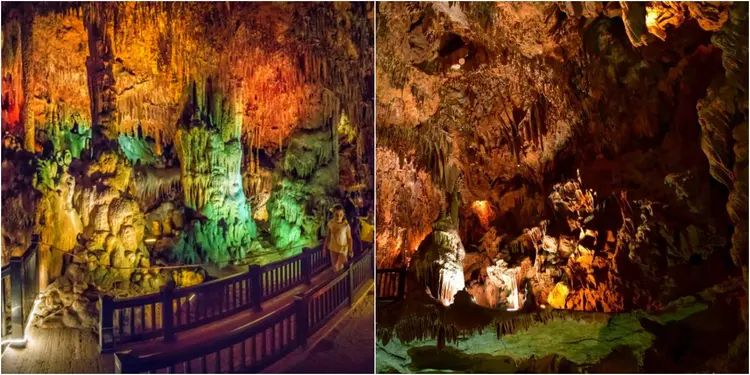
Damlataş Cave was found by accident. In 1948, dynamite blasting for a new pier in Alanya opened it up, and it became one of the first caves in Turkey opened to tourism. Its name means “dripping stone,” and the stalactites drip water summer and winter.
24. Emirgan Park, Istanbul

Emirgan Park spreads over a hillside in Sarıyer, between the neighborhoods of Emirgan and İstinye, with views over the Bosphorus. Timing matters. Tulip season arrives in April and turns the whole park into a festival of color, so late March to early April is the time to go.
25. Maiden’s Tower, Istanbul

On a tiny islet in the Bosphorus off Üsküdar, the Maiden’s Tower has changed jobs many times: Byzantine defense tower, Ottoman watchtower, lighthouse and, from 1829, a quarantine station. After a restoration, it reopened in May 2023 with a café inside, and boats run out from the shore. The cheaper option is just as good: a glass of Turkish tea at one of the waterfront tea gardens facing it, especially at sunset.
26. Ayder Plateau, Rize

Ayder is a high pasture village in the Black Sea mountains of Rize, at an average altitude of about 1,350 meters, declared a tourism center in 1987. It is the usual first stop for hikers heading into the Kaçkar Mountains National Park, which was declared in 1994. Rain is frequent outside summer. The warm months are the time to come for the green slopes and local food.
27. Pokut Plateau, Rize

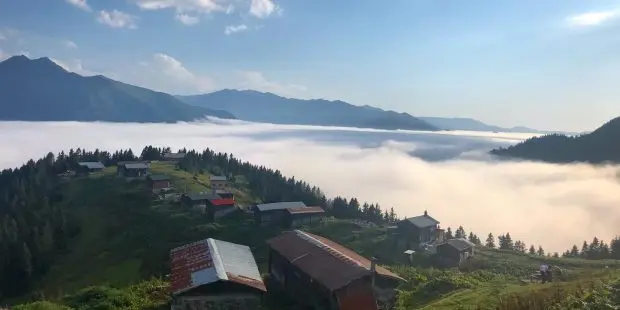
Pokut sits about 2,000 meters up in the Çamlıhemşin district of Rize, some 650 meters higher than Ayder, and often above the clouds. Around fifty traditional wooden houses dot the plateau, the oldest said to be about 250 years old, framed by wide pine forests. Mountain-sports lovers and photographers come for the light. Most visitors also walk over to the neighboring Sal Plateau, so it pays to plan both.
28. Uzungöl, Trabzon
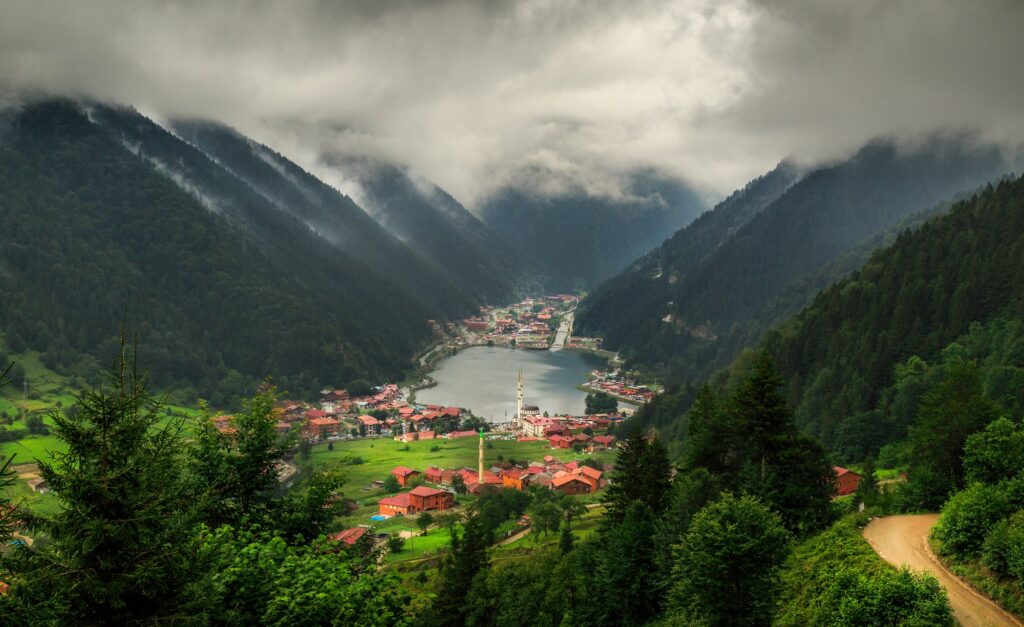
Still on the Black Sea. Uzungöl, meaning “long lake,” lies at 1,090 meters, about 19 km from the town of Çaykara and 99 km from Trabzon, inside a protected nature park. Local food, cool air and steep green slopes keep it high on nature lovers’ lists year after year.
29. Kaunos Rock Tombs, Dalyan

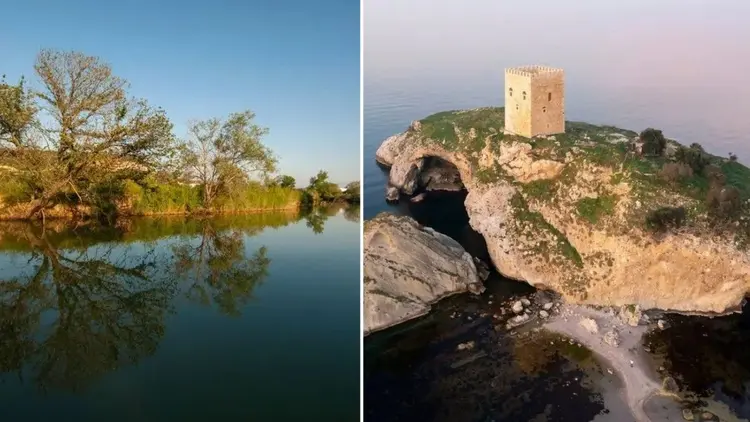
Back west to the coast, near Dalyan in Muğla province. Kaunos was once a port city, but centuries of silt pushed the shoreline away, so its ruins now sit inland. The city was ringed by long walls. What stops people in their tracks, though, are the temple-fronted tombs carved straight into the cliff face for its rulers.
30. Yakutiye Madrasa, Erzurum

Erzurum’s Yakutiye Madrasa was built in 1310 on the orders of Hoca Yakut, a local governor of the Ilkhanids, and it carries on the Anatolian Seljuk style of madrasa design. Seven centuries on, the carved portal and tiled minaret still read clearly. Today it is a museum of Turkish-Islamic art and ethnography.
31. Çatalhöyük, Konya

Çatalhöyük, on the Konya Plain, is one of the most important Neolithic sites anywhere. James Mellaart found it in 1958, and excavations uncovered 18 layers of buildings from roughly 7100 to 5600 BC. There were no streets. The mud-brick houses were packed wall to wall, so people walked across the rooftops and climbed down into their homes through openings in the roof. A UNESCO World Heritage Site since 2012, it is a must for anyone curious about how the first towns worked.
32. Göbekli Tepe, Şanlıurfa

Göbekli Tepe rewrote the textbooks.
Built around 9500 BC, its carved stone enclosures are among the oldest known monumental structures in the world, raised before farming had taken hold. Klaus Schmidt began digging in 1995, and the site joined the UNESCO World Heritage List in 2018. Geophysical surveys point to at least 20 large enclosures, of which only four have been excavated, so most of the story is still underground.
33. Museum of Anatolian Civilizations, Ankara

Ankara’s Museum of Anatolian Civilizations traces the land from the Paleolithic onward. Its collections are laid out in chronological order, so a walk through the halls runs through the region’s history in sequence, and the museum was named European Museum of the Year in 1997. After Çatalhöyük and Göbekli Tepe, this is where the pieces come together.
34. Akdamar Church, Van

On Akdamar Island in Lake Van stands the Armenian Cathedral of the Holy Cross, built between AD 915 and 921 and known in Turkey as Akdamar Church. It was raised in part to house a relic believed to be a piece of the True Cross. The exterior is the star: bands of carved plants, animals and biblical scenes wrap around the walls.
35. Dim Cave, Alanya

Dim Cave lies about 11 km from Alanya and was the first cave in Turkey opened to tourism and run by a private company. Part of it served as a shelter for people in prehistoric and historic times, and later, before tourism, as a goat pen. Damlataş was found by dynamite in the middle of town. Dim was always known to the locals, and today its forested setting and rich stalactites and stalagmites make it a standout among the country’s caves. It is open all year.
36. Sapadere Canyon, Alanya

Sapadere Canyon, in the village of Sapadere about 40 km from Alanya, is a karst canyon carved through limestone, with walls around 400 meters high. A 750-meter walkway follows the stream. The pool under the waterfall invites a swim. The water is cold, admittedly, but leaving without trying it seems like a waste.
37. Hagia Sophia, Istanbul

The list ends where many trips to Turkey begin. Hagia Sophia has stood in Istanbul since the 6th century, and the story that its columns were taken from Ephesus and other ancient cities turns out to be mostly legend: most of its marble was made for the building, with porphyry and a set of columns from Baalbek among the exceptions. Look up at the mosaics.
Since 2020 it has been a mosque again, so the same rules as the Blue Mosque apply: shoes off, modest dress, headscarves for women and no tourist visits during prayers.
Sources: Ministry of Culture and Tourism culture portal: Places to Visit, Göbekli Tepe (Wikipedia), Hasankeyf (Wikipedia)



Bir yanıt yazın